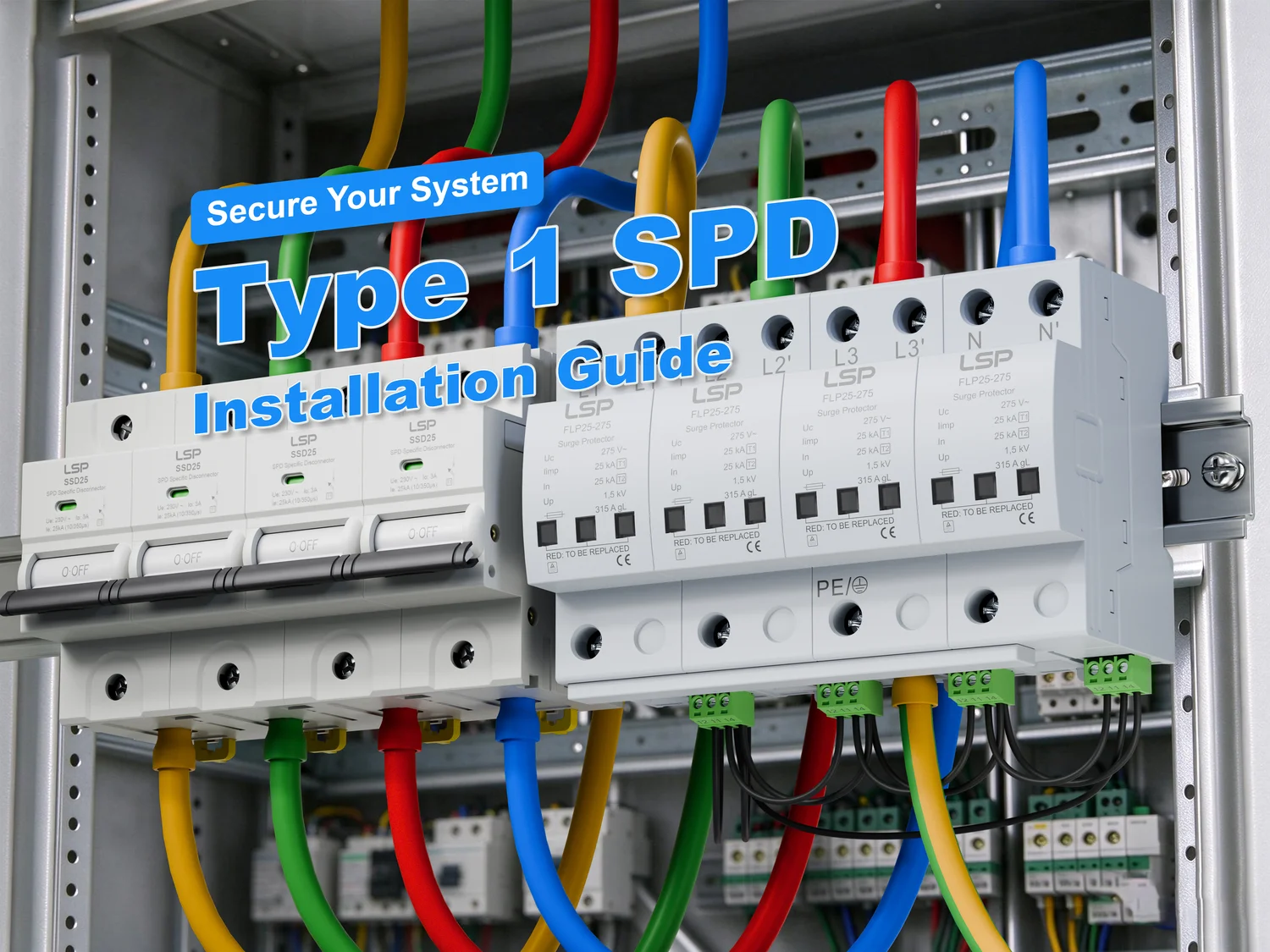
As PV systems continue to expand in scale, ensuring equipment safety and long-term power generation returns has become increasingly important. Surge overvoltages caused by lightning strikes, grid fluctuations, and equipment switching may damage critical devices such as PV modules, inverters, and energy storage systems, leading to downtime and economic losses. SPD (surge protective device) can effectively limit overvoltage and discharge surge current, making it an essential part of electrical protection in PV systems.
Why PV Systems Need SPD Protection
Surge and Overvoltage Risks in PV Systems
PV systems are typically installed on rooftops, open fields, or highly exposed environments, where they are continuously exposed to surge overvoltage risks caused by lightning strikes, grid fluctuations, and equipment switching. Although surges last for a very short time, their peak voltage may far exceed the withstand capacity of PV equipment, leading to reduced module performance, inverter failure, or even system downtime. As system voltage levels and equipment value continue to increase, surge protection has become an important measure for ensuring the safe operation of PV systems and extending equipment service life.
Impact of Lightning-Induced Surges on PV Modules and Inverters
Even if lightning does not directly strike the PV system, electromagnetic induction caused by nearby lightning strikes may generate high-energy surge currents in the cables. These transient overvoltages can propagate along both DC and AC lines, impacting PV modules, inverters, and monitoring equipment. Since inverters contain many precision electronic components, they are especially vulnerable to surge damage. Minor damage may affect operational stability, while severe damage can lead to equipment failure and high repair costs.
Transient Overvoltage Caused by Switching Operations and Grid Fluctuations
In addition to lightning-related factors, transient overvoltages can also be caused by grid switching, the startup and shutdown of large equipment, fault recovery, and load changes. Although these internal surges usually have lower energy than lightning surges, they occur more frequently and can cause cumulative damage to electronic equipment in PV systems over time. Long-term exposure to these voltage impacts may shorten equipment service life, increase failure rates, and affect the power generation efficiency and operational reliability of the entire system.
How SPD Protects Your PV Investment Returns
SPD (surge protective device) can conduct rapidly when overvoltage occurs, safely discharge surge current to the grounding system, and limit the voltage at the equipment side to a safe range. By protecting PV modules, inverters, energy storage equipment, and communication systems, SPD can effectively reduce the risk of equipment damage, minimize downtime, and lower maintenance costs. For high-value PV projects, proper SPD configuration not only improves system reliability but also helps protect long-term power generation revenue and investment returns.
What Is SPD and How Does It Work?
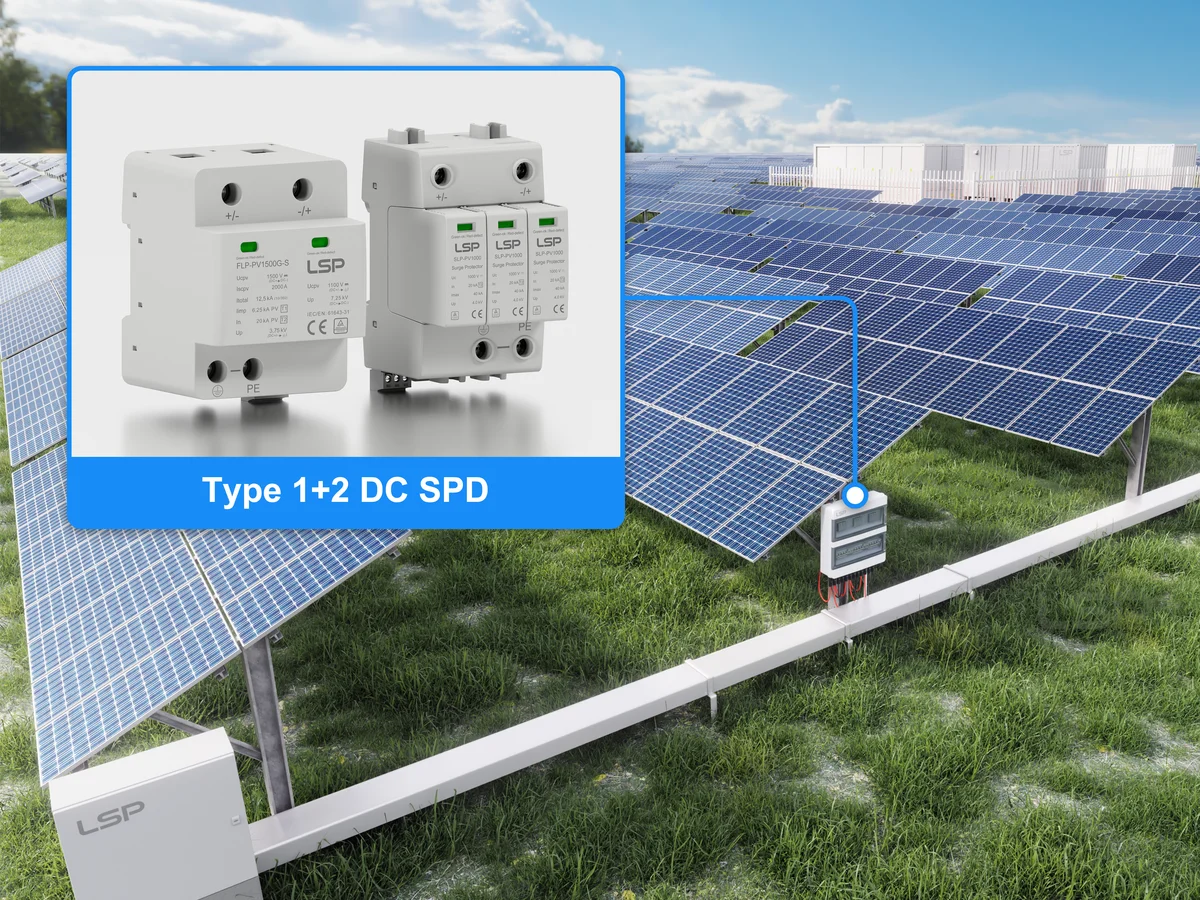
Definition and Basic Functions of SPD
SPD (Surge Protective Device) is a protective device used to limit transient overvoltage and discharge surge current. It is widely used in PV systems, power systems, communication systems, and industrial control systems. When surges are caused by lightning strikes, grid fluctuations, or equipment switching, SPD can respond quickly and keep excessive voltage within the withstand range of the equipment, thereby protecting critical devices from damage. In PV systems, SPD is usually installed on both the DC side and the AC side, making it an important component for ensuring safe system operation and extending equipment service life.
Surge Current Discharge Mechanism
Under normal operating conditions, SPD remains in a high-impedance state and does not affect system operation. When surge overvoltage occurs and exceeds the set threshold, the internal protective components of the SPD conduct rapidly, providing a low-impedance discharge path for surge current. The surge energy is then safely released through the grounding system, preventing high voltage from being directly applied to equipment terminals. After the surge disappears, the SPD automatically returns to its normal state and continues to provide standby protection. This rapid response mechanism is the core principle behind SPD surge protection.
Voltage Limitation and Equipment Protection Principle
SPD is not only responsible for discharging surge current, but also limits the transient voltage that equipment terminals are exposed to. When a surge occurs, SPD operates rapidly and clamps excessive voltage within a safe level, thereby protecting sensitive electronic equipment.
The main protection process includes:
- Detecting abnormal overvoltage and responding quickly
- Guiding surge current to the grounding system
- Reducing the residual voltage at equipment terminals
- Lowering the risk of insulation breakdown in electronic components
- Improving the operational reliability of the entire PV system
Through the combined functions of current discharge and voltage limitation, SPD can effectively reduce the risk of equipment damage caused by surges.
Key SPD Performance Parameters Explained
When selecting SPD, it is important to focus on its core technical parameters to ensure that it meets the actual protection requirements of the PV system.
Common key parameters include:
- Uc (Maximum Continuous Operating Voltage): the operating voltage that SPD can withstand continuously
- Up (Voltage Protection Level): the maximum residual voltage allowed to pass after SPD operates
- In (Nominal Discharge Current): the standard surge current that SPD can withstand multiple times
- Imax (Maximum Discharge Current): the maximum surge current that SPD can withstand
- Iimp (Impulse Current): an important parameter used to evaluate lightning current withstand capability
Properly matching these parameters helps ensure that SPD provides reliable and effective surge protection during actual operation.
Common Sources of Surges in PV Systems

Direct Lightning Strike Overvoltage in PV Systems
Direct lightning strikes are one of the most severe surge sources faced by PV systems. When lightning directly strikes the PV array, mounting structure, or nearby buildings, it can generate extremely high-energy lightning currents and transient overvoltages. Even if the system has grounding measures in place, part of the energy may still enter the equipment through cables, causing damage to PV modules, combiner boxes, and inverters. Therefore, in areas with frequent lightning activity, effective surge protection measures are especially important.
Surge Propagation Caused by Induced Lightning
Compared with direct lightning strikes, induced lightning is more common. When lightning occurs near a PV system, it can generate a strong electromagnetic field and induce transient overvoltages in power lines and communication lines. These surges can quickly propagate along cables to various devices within the system. Because induced lightning occurs more frequently, it may affect the service life of electronic components over time even when no obvious damage is visible, so protection should also be taken seriously.
Surges Caused by Grid Switching and Equipment Startup/Shutdown
Surges do not only come from lightning. Transient overvoltages may also occur during grid fault recovery, power source switching, and the startup or shutdown of large electrical equipment. These internal surges usually have lower energy, but they occur far more frequently than lightning surges. Repeated voltage impacts over time can accelerate the aging of electronic components, increase the risk of inverter and control system failures, and affect the stable operation of the PV system.
Overvoltage Risks Caused by Long Cable Runs
PV power plants usually use long DC and AC cables to connect various types of equipment. Increased cable length not only expands the area exposed to lightning induction, but may also create additional overvoltage phenomena during voltage wave propagation. Especially in large ground-mounted PV plants, long-distance cable runs are more likely to transmit surge energy to critical equipment. Therefore, proper planning of SPD installation locations is essential for reducing the risk of line overvoltage.
Key Equipment That Needs Protection in PV Systems
A PV system consists of multiple critical electrical and electronic units, which are highly sensitive to surge voltage. Once impacted by transient overvoltage, these devices may suffer from reduced efficiency, data loss, or even system downtime. Therefore, implementing coordinated protection for different types of equipment is key to improving system reliability.
| Key Equipment | Main Function | Surge Risk | SPD Protection Focus |
| PV Modules and Strings | Core units for solar power generation | Lightning induction and voltage reflection | Limit DC-side overvoltage and prevent insulation breakdown |
| PV Combiner Box | Combines multiple DC circuits | Superimposed line surges | Divert surge current and protect stable string output |
| Inverters and Energy Storage Equipment | DC/AC conversion and energy management | High-frequency switching surges and grid impacts | Protect power modules and control circuits |
| Monitoring and Communication Systems | Operation monitoring and data transmission | Induced lightning and signal interference | Suppress signal line surges and prevent data abnormalities |
By implementing coordinated SPD protection for different types of equipment, the overall system failure rate can be significantly reduced, improving the long-term operational stability and investment security of the PV power plant.
Types of SPD in PV Systems
Advantages of Type 2 DC SPD Protection
Type 2 DC SPD is the most common type of surge protection used in PV systems. It is mainly designed to handle transient overvoltages caused by induced lightning and switching operations. It is typically installed in the combiner box or on the DC side of the inverter, where it can effectively limit residual surge voltage and protect downstream equipment.
With fast response speed and wide application suitability, Type 2 DC SPD is ideal for most PV applications with low to medium lightning risk, making it a core configuration for basic surge protection.
Advantages of Type 1+2 DC SPD for Comprehensive Protection
Type 1+2 DC SPD combines lightning current discharge capability with surge voltage limitation, enabling it to handle high-energy impacts caused by both direct lightning strikes and induced lightning.
Compared with a standalone Type 2 DC SPD, it offers higher impulse current withstand capability and is suitable for PV projects in areas with frequent lightning activity or higher external lightning protection requirements.
With its integrated design, Type 1+2 DC SPD can reduce the number of protection devices required while improving the overall protection level of the system, making it a preferred solution for high-reliability PV power plants.
Differences Between AC-Side and DC-Side SPD
| Comparison Item | DC-Side SPD | AC-Side SPD |
| Application Position | PV modules, combiner boxes, inverter DC input | Inverter AC output and distribution system |
| Current Type | Direct current (DC) | Alternating current (AC) |
| Main Risks | Lightning-induced surges and DC overvoltage | Grid fluctuations and switching surges |
| Protected Equipment | PV modules and DC equipment | Grid-side equipment and load equipment |
| Voltage Characteristics | High DC voltage (600V–1500V) | Standard AC voltage (230V/400V) |
| Design Focus | High insulation performance and fast discharge capability | Grid compatibility and operational stability |
By properly configuring SPD on both the AC and DC sides, full-chain surge protection can be achieved for the PV system, improving overall operational safety and stability.
How to Select the Right SPD for PV Systems
The protection effectiveness of SPD depends not only on product quality, but also closely on correct selection. System voltage, lightning risk level, key technical parameters, and equipment compatibility are all important factors to consider when choosing SPD for PV systems.
Choosing SPD Based on PV System Voltage
The DC voltage levels of different PV systems vary significantly, ranging from 600V commonly used in residential systems to 1000V or even 1500V in large-scale power plants. When selecting SPD, the first step is to confirm whether its maximum continuous operating voltage (Uc) covers the upper limit of the system’s actual operating voltage, with an appropriate safety margin. This helps prevent SPD from being triggered under normal operating voltage or failing due to insulation breakdown when a surge occurs because of insufficient voltage rating.
Choosing SPD Based on Surge Risk Level
Lightning risk varies significantly between different installation environments, so SPD should be selected according to the actual risk level.
Recommended factors to consider include:
- Whether the building is equipped with an external lightning protection system
- The frequency of thunderstorm activity at the project location
- The area and exposure level of the PV array
- Cable length and routing method
- Surrounding buildings and geographical environment
In general, ordinary rooftop PV systems can use Type 2 DC SPD. For projects in areas with frequent lightning activity, systems equipped with lightning protection, or large ground-mounted PV power plants, Type 1+2 DC SPD with higher lightning current withstand capability is more suitable, providing more comprehensive protection.
Key Parameters: Uc, Up, In, Imax, and Iimp
| Parameter | Meaning | Selection Significance |
| Uc | Maximum Continuous Operating Voltage | Should be higher than the maximum operating voltage of the system |
| Up | Voltage Protection Level | The lower the value, the better the protection for the equipment |
| In | Nominal Discharge Current | Reflects the SPD’s ability to withstand repeated surges over time |
| Imax | Maximum Discharge Current | Indicates the maximum surge energy that the SPD can withstand |
| Iimp | Impulse Current | An important indicator for evaluating the ability to withstand lightning current impulses |
In actual projects, the above parameters should be considered comprehensively rather than focusing on a single indicator. Proper parameter matching ensures that SPD delivers optimal protection when a surge occurs, while also taking equipment service life and system reliability into account.
SPD Compatibility Requirements for PV Systems
In addition to voltage rating and discharge capability, SPD should also be compatible with the overall design of the PV system. During selection, it is necessary to confirm that the product is suitable for the system voltage level, grounding method, and installation environment, while also complying with relevant IEC and EN standards.
At the same time, SPD should be properly coordinated with circuit breakers, fuses, and other protective devices to avoid protection gaps or nuisance operation. Good system compatibility not only improves surge protection effectiveness but also ensures the long-term stable and safe operation of the PV system.
Where to Install SPD in PV Systems

Installation Location Between PV Modules and the Inverter
The length of the DC cable between the PV modules and the inverter determines the SPD installation strategy. When the cable length is less than 10 meters, installing one SPD near the inverter is usually sufficient to meet the protection requirements. When the cable length exceeds 10 meters, SPDs should be installed both on the inverter side and near the PV modules to form two-stage protection. This helps prevent induced surges from traveling along long cable runs without being effectively intercepted.
SPD Configuration in PV Combiner Boxes
The combiner box is a key node where multiple string currents are collected, and it is also a high-risk location where surge energy may concentrate. Therefore, it is usually a preferred installation point for DC SPD.
The SPD should be installed as close as possible to the busbar, with protection configured between both the positive and negative poles and ground. The connecting wires between the SPD and the busbar should be kept as short as possible to reduce the weakening effect of lead inductance on voltage limitation performance.
Since space inside the combiner box is limited, the physical size and heat dissipation conditions of the SPD should also be considered during selection.
AC Output-Side SPD Protection Layout for Inverters
The AC output terminal of the inverter is connected to the grid or load side, so AC SPD should also be installed to handle surges and switching transients from the grid side. The SPD should be installed as close as possible to the inverter output terminal, with each phase conductor and neutral conductor connected to ground as required. If multiple inverters share the same grid connection point, one set of AC SPDs may be shared depending on the system layout, but its discharge capacity must be sufficient to cover the combined risk of all parallel-connected equipment.
Surge Protection at the Main Distribution Entrance
The main incoming line of the distribution system is the key boundary between the grid and the entire PV system, and it is also the main entry point for external surges. Installing SPD at the entrance of the main distribution box can provide the first line of defense against lightning surges and switching overvoltages from the grid side. At the same time, it works together with downstream SPDs installed in combiner boxes and near inverters to form a coordinated protection system, preventing surge energy from directly reaching downstream equipment due to single-point protection failure.
How the Grounding System Works with SPD
The voltage-limiting performance of SPD depends heavily on a good grounding system. If the grounding resistance is too high or the grounding path is improper, surge current cannot be smoothly discharged into the earth, and the protective effect of SPD will be greatly reduced.
During installation, the connecting wire between the SPD grounding terminal and the grounding busbar should be kept as short and thick as possible. The grounding network of the entire system should maintain low impedance and equipotential bonding, allowing the SPD to become an efficient path for surge energy to be safely discharged into the earth.
SPD Applications in PV Projects
Residential Rooftop PV Systems
Residential rooftop PV systems usually have smaller capacity and shorter DC cable runs, and commonly use microinverters or a single string inverter. For this type of system, installing one Type 2 DC SPD in the combiner box or at the inverter DC input is generally sufficient to meet protection requirements. At the same time, an AC SPD should be installed in the main distribution box to protect against surges and utility grid fluctuations from the grid side. The overall solution prioritizes compact design and cost-effectiveness.
Commercial and Industrial Rooftop PV Projects
Commercial and industrial rooftop projects have larger installed capacity, with more inverters and longer cable runs, so surge risks increase as system complexity rises. For this type of project, SPDs are usually installed at the DC input of each inverter, inside combiner boxes, and at the AC grid connection point to form a multi-level protection system. If the large rooftop area causes cable runs to exceed 10 meters, Type 2 DC SPD should also be installed on the PV module side to ensure full-chain protection.
Ground-Mounted PV Power Plants and Large Solar Farms
Ground-mounted PV power plants and large solar farms are located in open areas, where PV mounting structures are highly concentrated and cover a wide area, making them significantly more exposed to direct lightning strikes than rooftop systems. These projects are usually equipped with an external air-termination system, so Type 1+2 DC SPD is commonly used to handle high-energy direct lightning currents. SPDs are also deployed in stages at multiple points such as inverters, combiner boxes, and distribution rooms to form a comprehensive protection network across the entire site.
Integrated PV and Energy Storage Systems
PV-storage integrated systems add battery energy storage units to the traditional PV architecture, so the scope of surge protection must also be extended to the DC side of the battery management system (BMS) and power conversion system (PCS). Since battery packs are more sensitive to voltage fluctuations, the voltage protection level of the SPD must be more precisely matched to the withstand voltage range of the battery system, while also considering the protection requirements of two independent DC circuits: the PV side and the energy storage side.
Why Choose LSP for PV SPD Solutions

Why LSP Stands Out as a Professional SPD Manufacturer
LSP focuses on the research, development, and manufacturing of surge protection products, with more than 15 years of industry experience. The company provides surge protection solutions for PV, power, and industrial projects in many countries and regions around the world.
LSP has a complete R&D, production, and quality management system, with products covering AC SPD, DC SPD, data line SPD, and other series. For solar PV applications, LSP offers surge protection products suitable for different system voltage levels and installation environments, helping customers improve system reliability, reduce equipment failure rates, and ensure long-term stable operation.
LSP DC SPD Solutions for 600V, 1000V, and 1500V PV Systems
| Product Series | Protection Type | Applicable Voltage | Application Scenario |
| FLP-PV600/S | Type 1+2 | 600V | Residential and small to medium-sized PV systems |
| SLP-PV600/S | Type 2 | 600V | Residential and small to medium-sized PV systems |
| FLP-PV1000/S | Type 1+2 | 1000V | Commercial, industrial, and medium to large-sized PV projects |
| SLP-PV1000/S | Type 2 | 1000V | Commercial, industrial, and medium to large-sized PV projects |
| FLP-PV1000G/S | Type 1+2 | 1000V | PV projects in high lightning-risk areas |
| FLP-PV1500G/S | Type 1+2 | 1500V | Large ground-mounted PV power plants and solar farms |
LSP provides a complete portfolio of PV SPD products to meet the surge protection requirements of PV systems of different sizes.
Quality Assurance System Compliant with IEC/EN International Standards
LSP’s DC SPD products are designed in accordance with the IEC/EN 61643-31 standard, while its AC SPD products are designed in accordance with the IEC/EN 61643-11 standard, ensuring that the products meet internationally recognized electrical safety requirements in terms of voltage-limiting performance, discharge capacity, and long-term reliability.
This standards-based development approach runs through the entire process, from component selection and structural design to factory testing, providing SPD solutions with consistent performance benchmarks for PV projects with different voltage levels and application scenarios.
FAQ
Does Every PV System Need SPD Protection?
Yes, SPDs are essential for PV systems. Solar arrays are highly vulnerable to lightning and surges due to their outdoor exposure. Without protection, overvoltages can destroy expensive inverters and panels. Compliance with standards like IEC 61643-31 ensures system safety and longevity. Installing DC SPDs is a cost-effective way to prevent catastrophic failure and protect your investment.
Should a PV System Install AC-Side SPD or DC-Side SPD?
PV systems should install both AC and DC SPDs for full protection. DC SPDs are vital for shielding panels and the inverter from DC-side surges or lightning. AC SPDs are necessary to protect the inverter and connected equipment from grid fluctuations. Since the inverter bridges both power types, using both SPDs ensures the entire installation remains safe from damage and downtime.
What Happens If SPD Is Undersized or Oversized?
If undersized, an SPD can overheat, fail, or cause fires when it cannot handle surge energy. If the voltage rating is too low, it may trigger during normal operation. Conversely, oversized discharge capacity adds unnecessary cost. Crucially, if the protection level (Up) is too high (oversized), the SPD won’t limit voltage enough, leaving sensitive electronics vulnerable to damage.
Can SPD Prevent Damage from Direct Lightning Strikes?
Type 1 SPDs are specifically designed to handle high-energy partial lightning currents from direct strikes. However, they must work alongside an external Lightning Protection System (LPS) like rods. While they provide essential protection, they cannot guarantee total safety against extreme direct hits. Type 2 SPDs are only intended for indirect surges and switching overvoltages.
Can lightning still damage my system after SPD is installed?
Yes, damage is still possible but far less likely. SPDs are not 100% foolproof. A massive direct strike can exceed the device’s discharge capacity, and improper grounding or long wiring distances can reduce effectiveness. For total security, SPDs must be part of a coordinated system that includes external lightning rods and correct installation to ensure equipment remains fully protected.