What Is a DC Combiner Box?
Definition
A DC Combiner Box is an essential electrical device used in photovoltaic (PV) systems to collect and combine the direct current (DC) generated by multiple solar panel strings into a single or multiple output circuits, which are then connected to an inverter for power conversion.
Function
In a solar power system, each string of solar panels produces DC electricity independently. Without a combiner box, these multiple outputs would require complex wiring and increase installation difficulty. The DC combiner box simplifies this process by consolidating all inputs into a unified output, significantly reducing cabling complexity and improving system organization.
Beyond current combining, a DC combiner box also serves as a centralized protection unit on the DC side. It typically integrates key protective components such as DC fuses or circuit breakers for overcurrent protection, and surge protective devices (SPDs) to safeguard the system against lightning strikes and transient overvoltages. Some advanced designs may also include monitoring systems for real-time performance tracking.
Where Is DC Combiner Box Located in a PV System?
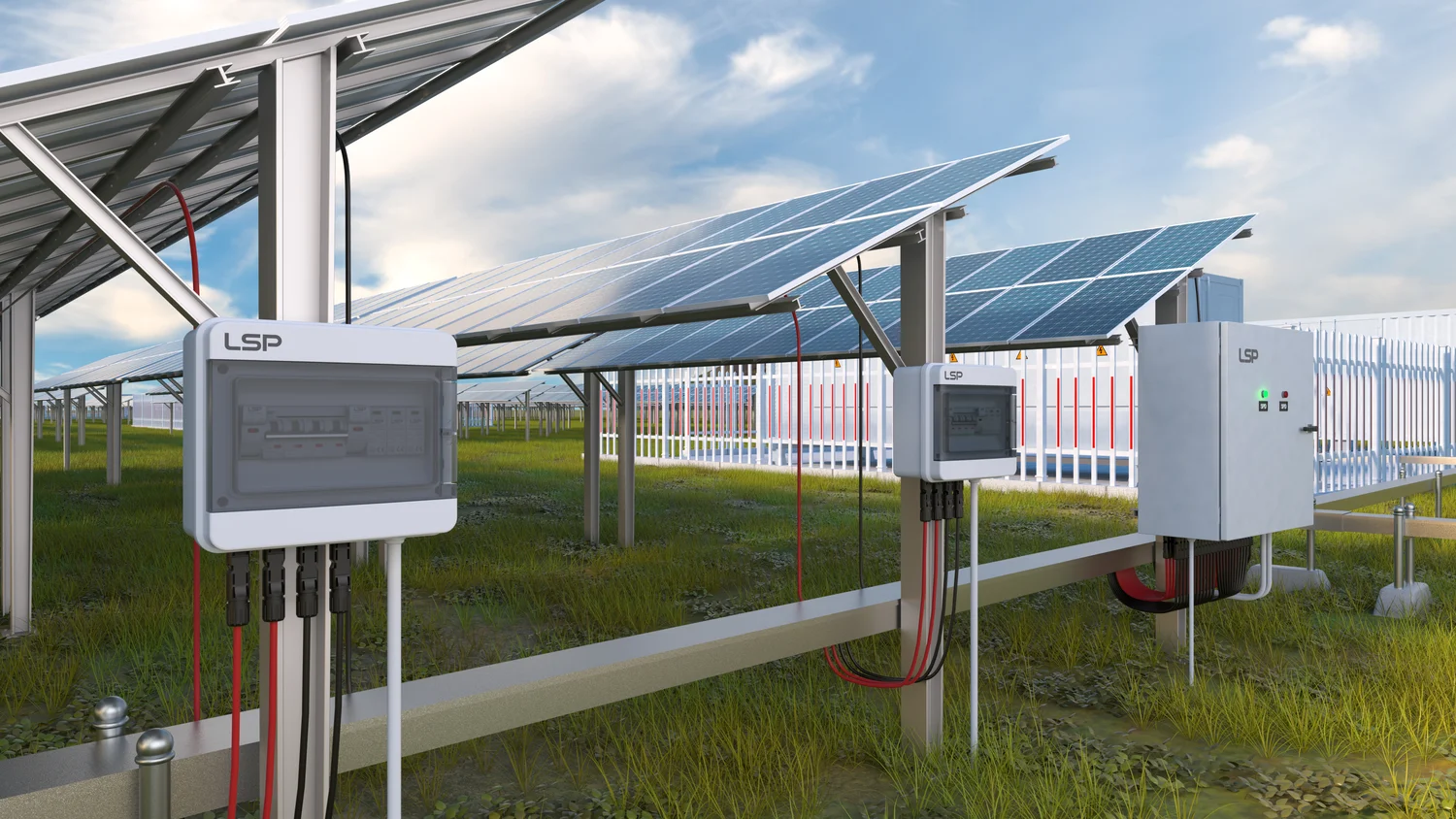
The DC combiner box is usually installed between the solar panel array and the inverter, acting as a critical interface that enhances system safety, reliability, and maintainability. By providing both electrical consolidation and protection, it plays a vital role in ensuring the stable and efficient operation of solar PV systems.
DC Combiner Box Key Components and Their Functions
A DC combiner box integrates several critical components to ensure safe, efficient, and reliable operation of a photovoltaic (PV) system. Each component plays a specific role in power collection, protection, and system management.

DC Fuses / Circuit Breakers
Function: Overcurrent protection
DC fuses or DC circuit breakers are used to protect each individual PV string from overcurrent conditions. If a fault such as a short circuit or reverse current occurs, the fuse will disconnect the affected string, preventing damage to the system and ensuring safety.
DC Surge Protective Device (SPD)
Function: Protection against lightning and transient overvoltage
The DC SPD is one of the most critical components in a DC combiner box. It protects the system from voltage spikes caused by lightning strikes or switching surges. When a surge occurs, the SPD quickly diverts excess energy to ground, preventing damage to sensitive equipment such as inverters.
DC Isolator Switch
Function: Safe disconnection
The DC isolator switch allows operators to safely disconnect the circuit for maintenance or emergency purposes. It ensures that the system can be de-energized without risk to personnel.
Benefits of Using a DC Combiner Box
Reduced Cabling Cost
By combining multiple PV strings into a single output, a DC combiner box greatly reduces the amount of cabling required. This leads to lower material costs and reduced installation labor, especially in large-scale solar projects.
Simplified Installation & Maintenance
With a centralized design, the DC combiner box simplifies system layout and wiring. Pre-assembled and pre-wired solutions further streamline installation, saving time and reducing the risk of wiring errors.
In addition, maintenance becomes easier, as all key components are located in one accessible enclosure.
Enhanced System Reliability
By integrating multiple protective components such as fuses, circuit breakers, and surge protective devices (SPDs), a DC combiner box significantly reduces the likelihood of system failures. In the event of a fault, the affected circuit can be quickly isolated, preventing the issue from spreading and ensuring stable overall system operation.
Among these components, the SPD plays a critical role in system protection. It effectively safeguards against lightning strikes and transient overvoltages by rapidly diverting excess energy to ground during voltage spikes. This helps protect critical equipment such as inverters, while minimizing the risk of equipment damage, fire hazards, and system downtime.
Applications of DC Combiner Box
Off-Grid and Hybrid Systems
DC combiner boxes are also used in off-grid and hybrid solar systems, where they connect solar arrays to battery storage systems or hybrid inverters. They ensure stable DC power management and provide necessary protection in systems that operate independently from the utility grid.
Energy Storage and EV Charging Systems
With the growth of renewable energy integration, DC combiner boxes are increasingly applied in energy storage systems and solar-powered EV charging stations. They help manage DC inputs efficiently while maintaining system safety and reliability.
Industrial PV Systems
For industrial PV projects, DC combiner boxes play a vital role in managing multiple PV strings across larger installations. They enhance system reliability and ensure stable operation under varying load conditions. Integrated protection devices, such as SPDs, help safeguard sensitive equipment from power surges.
In addition to the typical applications mentioned above, DC combiner boxes are also widely used in agrivoltaic systems, solar farms, and other renewable energy projects.
How to Choose the Right DC Combiner Box
Number of Input Strings and Output Configuration
When selecting a DC combiner box, the number of input strings and the output configuration are the two most fundamental and critical factors. They directly affect system safety, energy efficiency, and compatibility with the inverter.
Input: Number of Strings and Electrical Matching
On the input side, it is essential to determine how many PV strings will be connected. Common configurations include 4, 8, 12, and 16 inputs, depending on the project size.
However, input design is not just about quantity—it must also meet key electrical requirements, including:
- Maximum current per string (Imp)
- Maximum system voltage (e.g., 1000V or 1500V)
- Temperature effects on open-circuit voltage (Uoc)
In addition, each input is typically equipped with individual overcurrent protection (such as DC fuses) to ensure that a fault in one string does not impact others.
A well-designed input configuration prevents overload, reduces losses, and improves overall system safety and reliability.
Output: Single vs Multiple Output Design
The output configuration determines how the combined DC power is delivered to the inverter.
There are two main types:
- Single Output
All strings are combined into one output connected to a single inverter input. This is suitable for centralized inverters or small to medium-sized systems.
Advantages: simple structure, lower cost
Consideration: higher output current requires proper cable sizing and protection
- Multiple Outputs
Strings are grouped and distributed across multiple outputs, each connected to separate MPPT inputs or inverters.
Advantages:
- Improved MPPT tracking efficiency
- Reduced mismatch losses
- Better suited for complex layouts or multiple orientations
In modern PV systems, multi-output designs are increasingly preferred, especially when using inverters with multiple MPPTs.
The output configuration should be carefully matched with the inverter’s MPPT structure to maximize energy yield.
Voltage and Current Ratings
Selecting the correct voltage and current ratings for a DC combiner box is critical to ensuring system safety, stability, and long-term performance. Improper sizing can lead to overheating, insulation failure, or even equipment damage.
Voltage Rating Selection
The rated voltage of the DC combiner box must exceed the maximum DC voltage of the PV system. Common system voltage levels include 600V, 1000V, and 1500V.
Key factors to consider include:
- Open-circuit voltage (Uoc) of the PV strings
- Voltage increase under low-temperature conditions
- Maximum allowable system voltage
Key Principle: Rated voltage ≥ Maximum corrected Uoc
In colder environments, PV module voltage increases. If temperature correction is not considered, the system voltage may exceed equipment limits, creating safety risks.
Current Rating Selection
Current sizing must account for both input string current and total combined output current:
- Input Current (per string) Based on the module’s operating current (Imp), typically with a safety factor (commonly 1.25×).
- Output Current (total combined current) The sum of all input currents, which determines the capacity requirements for busbars, cables, and switching devices.
Key Principle:
- Input current ≥ 1.25 × Imp
- Total output current = sum of all string currents
Internal Component Coordination
Voltage and current ratings directly impact the selection of internal components, including:
- DC fuses (rated current and breaking capacity)
- Circuit breakers or isolators
- Surge Protective Devices (SPD) with appropriate maximum continuous operating voltage (Uc)
- Busbars and conductor sizing
Any underrated component can become a weak point in the system.
Safety Margin and Design Buffer
To ensure long-term reliability, it is recommended to include sufficient design margins:
- Voltage: account for extreme low temperatures
- Current: allow 10–25% safety margin
- Consider thermal rise and aging effects
This helps prevent failures caused by environmental changes or future system expansion.
LSP DC Combiner Box Solutions
About LSP and Brand Strengths

You want a partner you can trust for your dc system. LSP began in 2010 and is now a top name in dc surge protection and dc combiner box technology. LSP makes products in modern factories with strict checks. The company spends money on research to make new solutions for dc and energy systems. LSP’s team tests every product in new labs to meet high standards.
LSP helps more than 1,200 companies in 35 countries. You can find LSP products in many solar and energy projects worldwide. The company’s goal is to keep your dc setups safe and reliable. LSP wants to be a leader in dc surge protection and energy safety.
LSP gives technical support, custom designs, and quick delivery. You get help from experts who know dc and energy systems. LSP’s products have TUV, CB, and CE certifications. These show the products follow IEC safety and performance rules.
Conclusion
With the rapid growth of photovoltaic and energy storage systems, along with the global transition toward clean energy, DC combiner boxes have become increasingly important across a wide range of applications. From residential rooftop installations and commercial & industrial PV systems to large-scale solar farms and integrated energy storage projects, DC combiner boxes play a critical role in power aggregation, system protection, and operational management.
They not only simplify system wiring and reduce installation costs, but also significantly enhance system safety and stability by integrating multiple protection components such as fuses, circuit breakers, and surge protective devices (SPDs). In complex environments and high-voltage applications, DC combiner boxes are essential for ensuring long-term, reliable system performance.
FAQ
Why do you need a DC combiner box in your solar system?
A DC combiner box joins many solar strings together. This makes wiring easier for you. It helps keep your system safe. You can find problems faster with it.
Why does a DC combiner box improve safety?
A DC combiner box has fuses and circuit breakers. It also has surge protectors inside. These parts stop too much current or voltage. They protect your system from lightning surges. Your equipment stays safe and works well.
Why should you choose a box with surge protection?
Surge protection helps your system handle extra voltage. It comes from lightning surges. The surge protector clamps the voltage. It sends extra current to the ground. This keeps your solar equipment working longer.
Why is following IEC standards important for your solar setup?
IEC standards show your system meets safety rules. These rules are used around the world. Certified parts make your system reliable. Your solar setup stays safe for many years.
Why does a DC combiner box make maintenance easier?
A DC combiner box puts all wires in one place. You can check each string quickly. If something breaks, you find it fast. You fix problems sooner and save money.
You use fewer wires in your setup. You spend less on labor and repairs. The box protects your system from damage. Your solar setup lasts longer and works better.