Key Differences and Similarities Explained
Explore the essential features of circuit breakers and miniature circuit breakers.
Features | Standard Circuit Breakers | Miniature Circuit Breakers (MCBs) |
|---|---|---|
Current Rating | Handles high current loads. | Up to 125 amps maximum. |
Physical Size | Larger, requires more panel space. | Compact, fits in tight spaces. |
Applications | Used in industrial and commercial settings. | Ideal for residential and small offices. |
Trip Settings | Often adjustable for various loads. | Typically fixed trip settings. |
Protection Type | Protects against overloads and short circuits. | Also protects against overloads and short circuits. |
Installation Complexity | Requires more space and careful installation. | Easier to install on DIN rails. |
Cost | Generally more expensive. | Cost-effective for small applications. |
Maintenance Needs | Requires regular checks and maintenance. | Lower maintenance requirements. |
You have to pick between circuit breakers vs miniature circuit breakers for your electrical system. The biggest difference is their current rating and size. Circuit breakers can handle more current. They are best for big buildings like factories or stores. Miniature circuit breakers are smaller. They fit in tight spaces and are good for houses or small offices. The table below shows how size and current rating change for each use.
Application Type | Common Amp Ratings | Physical Size Description |
|---|---|---|
Residential | 15, 20, 30, 40-50, 60 amps | Standard sizes for home use, usually MCBs. |
Commercial | 100-225, 400-600 amps | Bigger breakers for commercial buildings. |
Industrial | 1000 amps and above | Strong breakers for factories and big machines. |
Miniature Circuit Breakers (MCBs) | Up to 125 amps | Small size, used in homes and small offices. |
Molded Case Circuit Breakers (MCCBs) | 100-2500 amps | Used a lot in commercial places. |
Air Circuit Breakers (ACBs) | Over 6000 amps | Used for very high power in factories. |
Choosing between circuit breakers vs miniature circuit breakers is important. Picking the right one keeps your electrical system safe and stops damage.
Definitions and Functions
Circuit Breakers Overview
Circuit breakers help keep electrical systems safe. They stop electricity if something goes wrong, like an overload or short circuit. People use them in homes, businesses, and factories. Circuit breakers can handle a lot of electricity. They fit into big electrical panels. You see them where strong protection is needed for big machines or buildings.
Here is a table that shows how different standards explain circuit breakers and where they are used:
Type of Circuit Breaker | Standard | Application |
|---|---|---|
Circuit Breakers | IEC/EN 60898-1 | Overcurrent protection in households and similar installations |
Circuit Breakers | IEC 60947-2 | Industrial applications with rated currents from 0.5 to 6300A |
Miniature Circuit Breakers Overview
Miniature circuit breakers protect smaller electrical circuits. People use them in homes, schools, shops, and small offices. These breakers are small and fit into regular boards. They turn off the circuit if the current gets too high. You count on them for safety in places that do not need much power.
The table below shows how standards work for miniature circuit breakers:
Type of Circuit Breaker | Standard | Application |
|---|---|---|
Miniature Circuit Breakers | IEC 60898-1 | Households, schools, shops, and office switchboards |
Miniature Circuit Breakers | IEC/EN 60947-2 | Industrial applications for power distribution up to 1000V AC and 1500V DC |
Key Functions Compared
When you look at circuit breakers and miniature circuit breakers, you see both stop electrical problems, but they are used in different places.
Circuit breakers can switch off load and short circuit currents. You use them to turn the power back on fast after a problem.
Miniature circuit breakers protect from too much current and short circuits. They can also help with earth faults if the loop impedance is low enough.
Both types can be used as switches to control circuits safely.
Miniature circuit breakers work by themselves. They open the circuit if the current is too high.
Here is a table that compares what each one does:
Function/Characteristic | Circuit Breakers | Miniature Circuit Breakers |
|---|---|---|
Protection against overloading | Yes | Yes |
Protection against short-circuit faults | Yes | Yes |
Protection against earth faults | Yes (with specific models) | Yes (if loop impedance is low enough) |
Use as isolating switches | Yes | Yes |
Quick restoration of energy supply | Yes | Yes |
Automatic operation | Yes | Yes |
You should pick the right one for your space and power needs. Circuit breakers are good for big, high-power systems. Miniature circuit breakers are best for homes and small offices.
Circuit Breaker Types
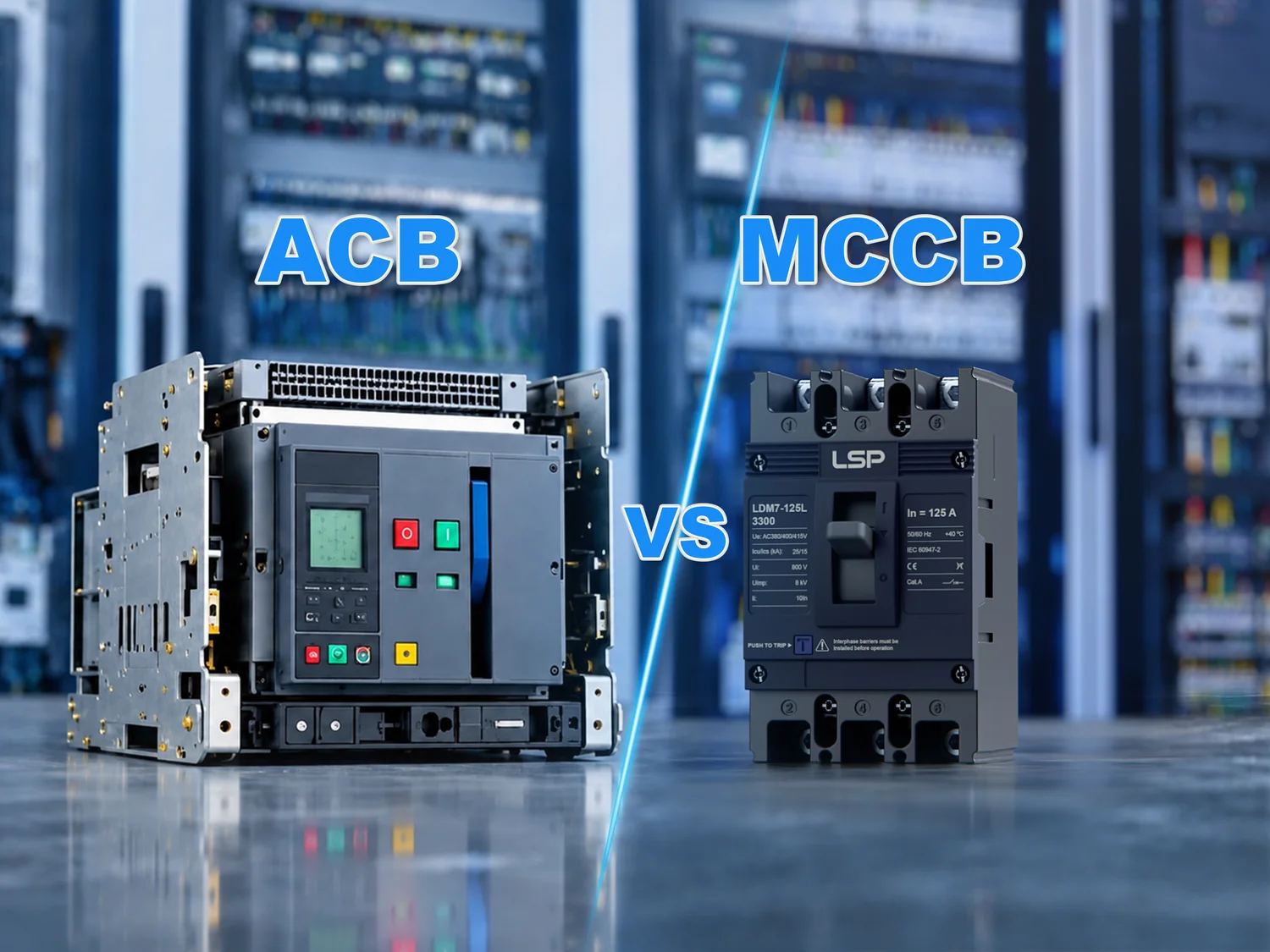
Air Circuit Breakers
Air circuit breakers are used in places with high voltage. They use air to stop the electrical arc during a fault. You see them in factories and big buildings. Air circuit breakers protect against short circuits and overloads. They work fast to disconnect power when there is a problem.
Air circuit breakers are found in:
Industrial plants
Large commercial buildings
Electrical panels for heavy machines
Air circuit breakers give strong safety in tough places. They need extra equipment and are bigger than other breakers.
Molded Case Circuit Breakers (MCCB)
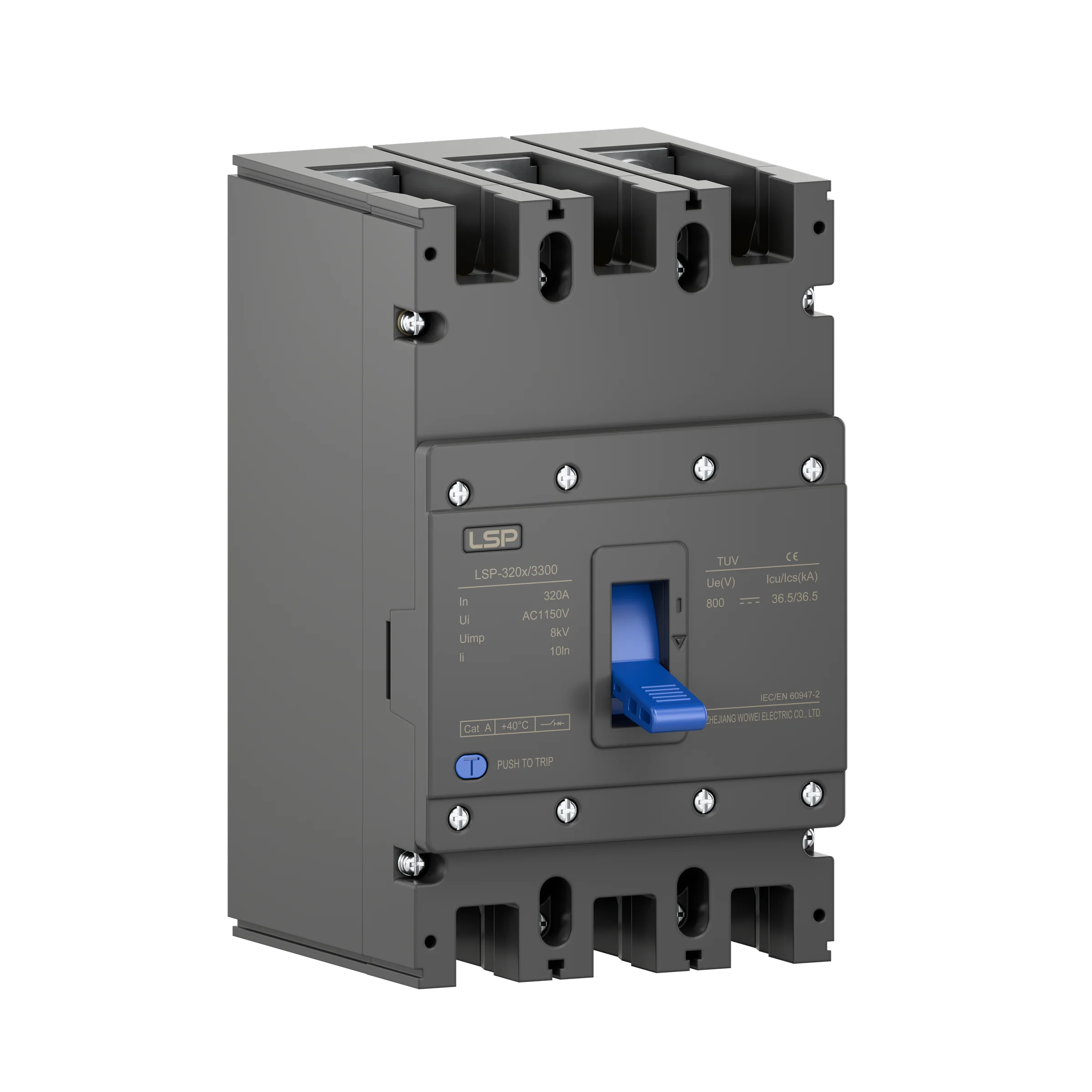
Molded case circuit breakers protect medium voltage systems. You see them in schools, commercial buildings, and some big homes. These breakers have a plastic case that holds all the parts. They handle more current than miniature circuit breakers. They are smaller than air circuit breakers.
MCCBs are used for:
Circuits in offices and schools
Equipment with higher power needs
Adjustable trip settings for different loads
You can change the trip settings on many MCCBs. This lets you match the breaker to your system. MCCBs cut off power automatically after tripping. This keeps your system safe.
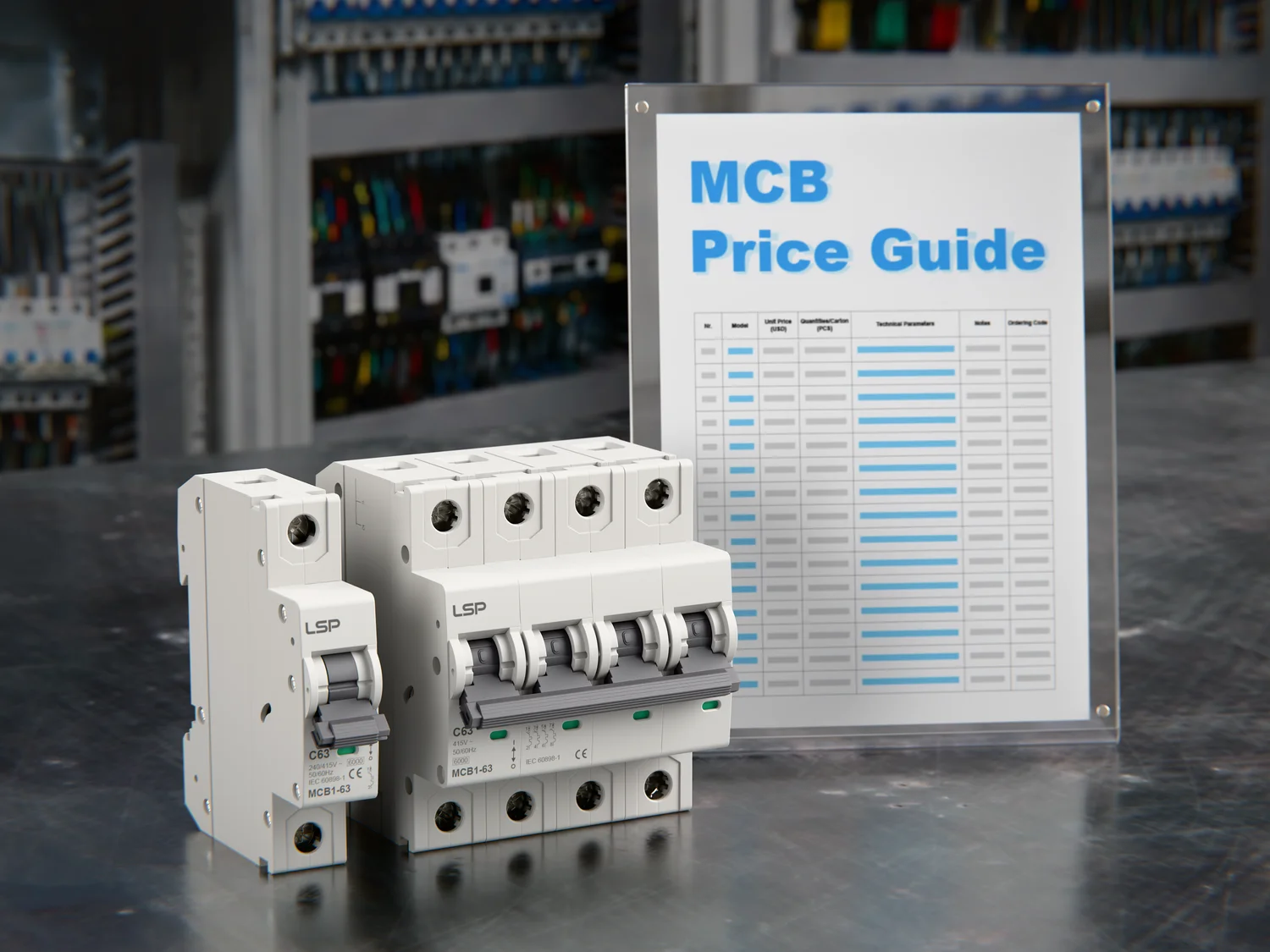
Miniature Circuit Breakers (MCB)
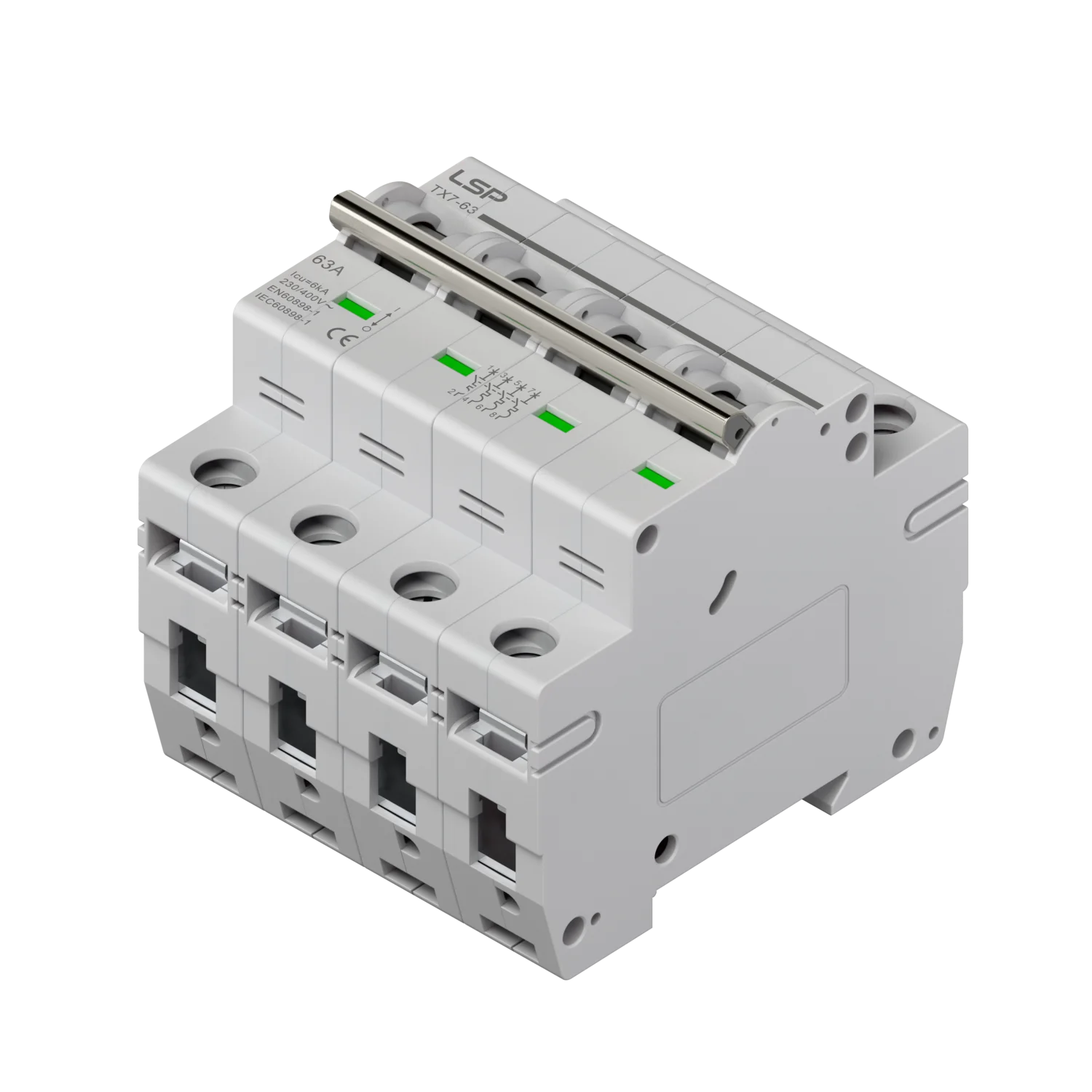
A miniature circuit breaker is best for low voltage systems. You find these in homes, small offices, and shops. MCBs protect wires from overloads and short circuits. They are easy to use and fit in standard panels.
MCBs are found in:
Home switchboards
Small office circuits
School classrooms
You do not need extra equipment for an MCB. They are easy to reset after tripping. MCBs are smaller and lighter than MCCBs and air circuit breakers.
Tip: When you compare these breakers, think about voltage and current. Air circuit breakers handle the most. MCCBs are for medium needs. MCBs work for low voltage.
Here is a table to show the main differences:
Feature | Air Circuit Breakers (ACBs) | Molded Case Circuit Breakers (MCCBs) | Miniature Circuit Breakers (MCBs) |
|---|---|---|---|
Breaking Current | Very high | Medium | Low |
Supporting Equipment | Complex | Moderate | Simple |
Voltage Level | High | Medium | Low |
Function | Trips on short circuit | Trips on overload | Trips on overload and short circuit |
Application Scope | Industrial | Commercial/Industrial | Residential/Small commercial |
Safety | High | Moderate | Basic |
Pick the breaker that fits your building and equipment. Each type gives a different level of protection and fits different spaces.
Residual Current Circuit Breakers (RCCB)
You should learn how a residual current circuit breaker works. This breaker helps protect people from electric shock. It finds small leaks of current that go the wrong way. If you touch a live wire, the breaker notices a change in current. It checks the current in the live and neutral wires. If the current is not the same, it shuts off power fast.
You see a residual current circuit breaker in homes, schools, and offices. It is not the same as a standard circuit breaker. Standard breakers keep equipment safe from overloads and short circuits. A residual current breaker keeps people safe from electric shocks. It does not stop overloads or short circuits unless used with another breaker.
Here is a table to compare a residual current breaker with other types:
Feature | Residual Current Breaker (RCCB) | Miniature Circuit Breaker (MCB) | Molded Case Circuit Breaker (MCCB) |
|---|---|---|---|
Main Protection | Electric shock, earth faults | Overload, short circuit | Overload, short circuit |
Detects Small Current Leaks | Yes | No | No |
Protects Equipment | No | Yes | Yes |
Protects People | Yes | No | No |
Common Use | Homes, offices, schools | Homes, small offices | Commercial, industrial |
You should pick a residual current breaker for extra safety. It is smart for places with kids or older people. You can find a residual current device in new electrical panels. This device acts like a safety switch. It turns off power if it finds a problem.
Tip: Always use a residual current breaker with an MCB or MCCB. This gives full protection for people and equipment.
You can test a residual current circuit breaker with a button. Press the button to pretend there is a fault. The breaker should turn off right away. If it does not, you need a new one.
When you look at a residual current breaker and other circuit breakers, you see it adds more safety. It does not replace overload or short-circuit protection. It works with other breakers to keep your system safe.
MCBs Deep Dive
Technical Specs
Rated Current & Voltage
You need to know the current rating and voltage rating before choosing a miniature circuit breaker. The current rating tells you how much current the breaker can handle without tripping. Most MCBs have a current rating from 0.5 amps up to 125 amps. You see these ratings printed on the breaker. The voltage rating shows the highest voltage the breaker can safely interrupt. Common values are 230V and 400V. You should always match the current rating and voltage rating to your circuit for safe operation.
Breaking Capacity (up to 15kA)
Breaking capacity means the highest short circuit current the breaker can safely stop. For MCBs, this value can reach up to 15,000 amps (15kA). You need to check the short circuit current rating of your system. If the short circuit current is higher than the breaker’s capacity, the breaker may not protect your wiring. MCBs are best for places where the possible short circuit current is not too high, like homes and small offices.
Trip Curves (B, C, D)
Trip curves show how quickly an MCB reacts to a fault. You can pick from different types based on your needs. The most common trip curves are B, C, and D. Each one works best for a certain type of load.
Here is a table to help you compare:
Type | Tripping Characteristics | Response Time | Voltage Rating | Current Ratings |
|---|---|---|---|---|
B | 3 to 5 times rated current | Very fast | 230V, 400V | 0.5A to 125A |
C | 5 to 10 times rated current | Slower than B | 230V, 400V | 0.5A to 125A |
D | 10 to 20 times rated current | Slowest | 230V, 400V | 0.5A to 125A |
Type B trips quickly and works well for lights and outlets. Type C is better for circuits with motors or air conditioners. Type D is for special equipment like transformers or welding machines. You should choose the right trip curve for your load to avoid false trips or missed faults.
MCB Types
Single, Double, Triple Pole
You can find MCBs in single, double, and triple pole versions. A single pole MCB protects one live wire. You use it for most home circuits. A double pole MCB protects both live and neutral wires. This type gives extra safety and is common in small offices. A triple pole MCB protects three wires at once. You need this for three-phase systems, like those in factories or large buildings. Picking the right type helps you match your breaker to your wiring setup.
Advantages
You get many advantages when you use a miniature circuit breaker instead of a fuse or traditional breaker. MCBs have a closed design that lowers the risk of electric shock by 90%. They use a thermal-magnetic trip system. This system helps prevent false trips and only cuts power during real faults. You do not need to replace an MCB after it trips. You just reset it and restore power.
While the initial cost of an MCB may be higher, you save money over time. The chart below shows how much you can save in five years compared to using fuses:
You also reduce maintenance and equipment damage. Over five years, MCBs can save you over $1,000 compared to fuses. You get better safety, lower costs, and easier use with MCBs.
Limitations
When you pick a miniature circuit breaker (MCB), you get many good things for homes and small offices. But MCBs have some limits. You should know these limits before you choose. This helps you pick the best option for your electrical system.
MCBs do not work for every job. In places with lots of current or in factories, MCBs can have problems. The table below shows the main limits:
Limitation | Description |
|---|---|
Cost | MCBs are usually pricier than fuses, especially for big systems. |
Size Limitations | MCBs might not fit very high current systems unless they are much bigger, which is not efficient. |
Complexity | For simple jobs, a fuse can be cheaper and easier. |
Think about cost first. MCBs cost more than fuses, especially for big circuits or strong machines. If you have a large system, the price can get high fast. For small jobs, cost is not a big deal. But for factories, it matters a lot.
Size is important too. MCBs are small for homes. But they get big if you use them for lots of current. You might need a bigger panel for large MCBs. This wastes space and costs more to install. In factories, you see other breakers like molded case or air circuit breakers. These work better for high currents.
Complexity is another thing to think about. For easy, small circuits, a fuse can do the job. Fuses are simple to put in and change. You do not need to set trip curves or other settings. Sometimes, using an MCB makes things harder and costs more.
Tip: Always pick a breaker that matches your system. If you have lots of current or work in a factory, look at other breaker types. These can save money and work better.
Breaking capacity matters too. MCBs can handle up to 15kA. In some factories, fault currents can be much higher. If the fault current is more than the MCB can handle, it will not protect your system. In these cases, you need a breaker made for bigger faults.
Circuit Breakers vs Miniature Circuit Breakers
Size & Physical Dimensions
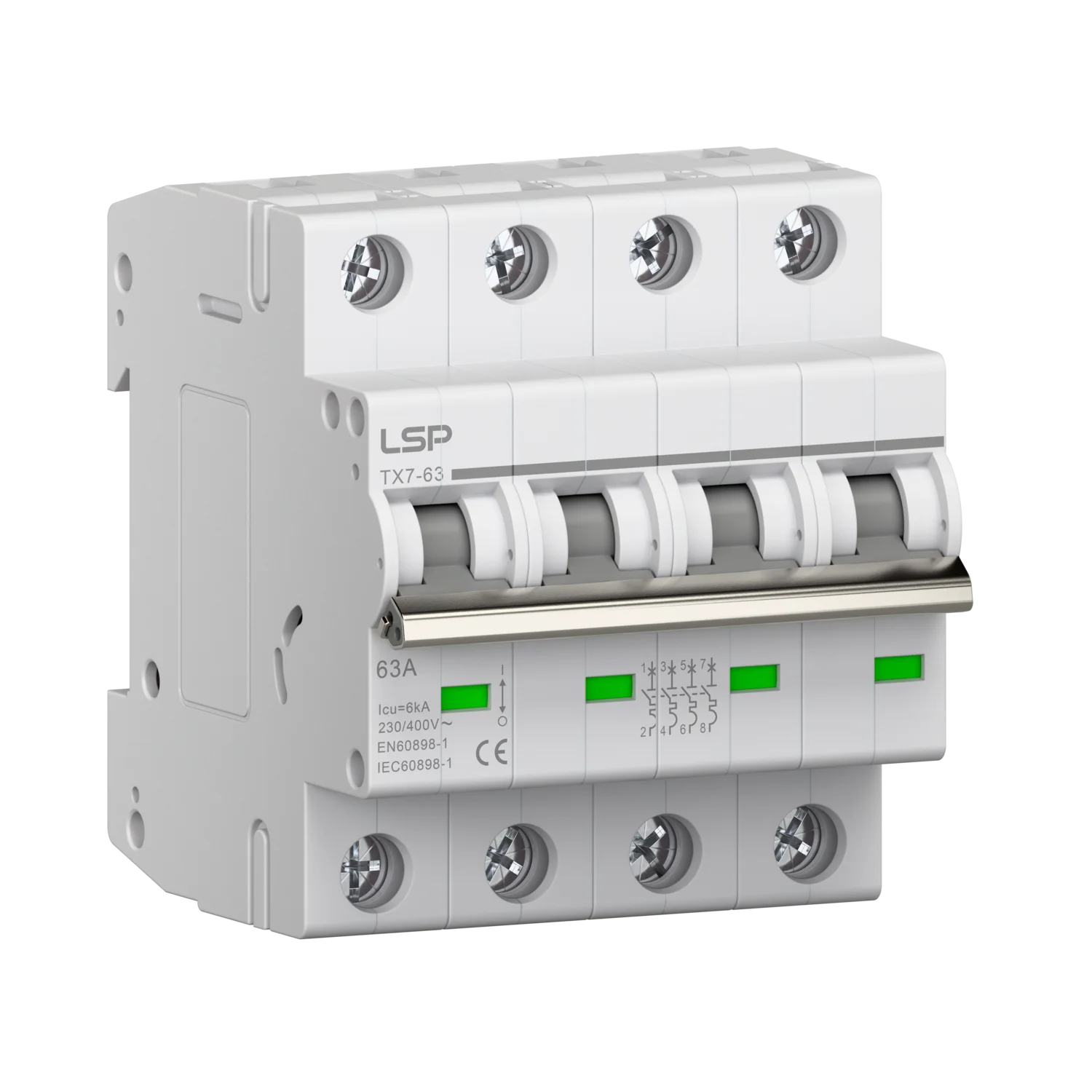
When you look at circuit breakers and miniature circuit breakers, you see they are not the same size. Miniature circuit breakers are much smaller than regular circuit breakers. Most MCBs can handle up to 100A. They use DIN rail mounting, so you can put them in place quickly. This is good for homes and small offices. Bigger circuit breakers, like molded case circuit breakers, can handle more current, sometimes up to 1600A. These need panel mounting and take up more room.
The width of each breaker is important. Small breakers can be only 13 mm wide. Most MCBs are about 18 mm wide. Large molded case types can be as wide as 90 mm. This means you can fit more small breakers in a panel. If you use big breakers, you need a bigger panel. You must follow rules like IEC 60898-1 for homes and IEC 60947-2 for businesses. These rules help keep your panel safe and not too crowded.
Tip: Always check the size and how you mount the breaker before you buy. This helps you plan your panel and stops fitting problems.
Performance & Breaking Capacity
Performance is also important when you pick a breaker. Breaking capacity shows how much fault current a breaker can stop safely. MCBs in homes usually stop up to 6kA. In stores or offices, breakers often stop 10kA. Factories and big buildings need breakers that can stop 15kA or even more.
Here is a table that shows the usual breaking capacities:
Application Type | Breaking Capacity |
|---|---|
Homes | 6kA |
Commercial Places | 10kA |
Factories/Big Buildings | 15kA or more |
You need to pick a breaker with the right breaking capacity for your system. If the fault current is higher than the breaker’s rating, it will not protect your wires. MCBs are good for homes and small offices. For places with more fault current, you should use molded case or air circuit breakers.
Cost Comparison
Cost matters when you choose between circuit breakers and miniature circuit breakers. MCBs cost less and are good for small jobs. You see them in homes and small offices because they are cheap and easy to put in. Bigger circuit breakers, like molded case and air circuit breakers, cost more money. They need bigger panels and special mounting. You pay more for these, but they give better protection for big systems.
MCBs: Cost less, best for homes and small offices.
MCCBs: Cost more, used in stores and offices.
Air Circuit Breakers: Cost the most, needed for factories and big machines.
You should think about how much you want to spend and what your system needs. For small circuits, MCBs save money. For bigger jobs, you need to spend more for stronger breakers.
Application Suitability
When you look at circuit breakers vs miniature circuit breakers, you need to think about where you will use them. Each one works best in different places and for different power needs. You want to pick the right one for your home, business, or factory.
Residential
People use miniature circuit breakers most in homes. These breakers keep your lights, outlets, and appliances safe. They fit well in small panels and work with the lower currents in houses. Here are things to check when picking one for your house:
Load Type: Most things in homes are resistive, like lights and heaters. Type B trip curves are best for these.
Current Rating: Choose an MCB with a rating just above your normal current. Common ratings are 6A, 10A, 16A, and 32A.
Voltage Rating: Make sure the breaker matches your home voltage, usually 230V.
Fault Protection: Pick MCBs with built-in residual current protection for extra safety.
Space Requirements: MCBs are small, so you can fit many in a panel.
Compliance with Standards: Look for breakers that meet IEC 60898-1 for homes.
It is easy to put in and reset after it trips. Miniature circuit breakers keep your family and devices safe.
Commercial
Stores, offices, and schools need stronger protection. You see both circuit breakers and miniature circuit breakers here. The choice depends on how big the building is and what equipment you have.
Load Type: Commercial buildings have both resistive and inductive loads, like computers and air conditioners. Type C trip curves handle these loads.
Current Rating: You need breakers for higher currents, often 40A to 100A.
Trip Curve: Type C is common, but you might need Type D for special machines.
Voltage Rating: Most commercial places use 230V or 400V.
Fault Protection: Residual current protection is important in public spaces.
Space Requirements: Panels are bigger, so you can use both MCBs and MCCBs.
Compliance with Standards: Make sure your breakers meet IEC 60947-2 for commercial use.
Feature | Miniature Circuit Breakers | Molded Case Circuit Breakers |
|---|---|---|
Current Range | Up to 125A | 100A to 2500A |
Panel Size | Small to medium | Medium to large |
Trip Curve | B, C, D | Adjustable |
Common Use | Lighting, outlets | HVAC, elevators, motors |
Match the breaker to your equipment and building size. This keeps your business safe.
Industrial
Factories and big plants need the strongest protection. You see circuit breakers vs miniature circuit breakers compared a lot in these places. Industrial systems use high currents and big machines.
Load Type: Industrial loads are mostly inductive, like motors and transformers. Type D trip curves are best for these.
Current Rating: You need breakers for very high currents, sometimes over 1000A.
Trip Curve: Type D or adjustable trip curves are needed for heavy machines.
Voltage Rating: Industrial systems often use 400V or more.
Fault Protection: Use breakers with high breaking capacity and earth fault protection.
Space Requirements: Large panels are needed for big breakers.
Compliance with Standards: Always use breakers that meet IEC 60947-2 for industrial safety.
Feature | Miniature Circuit Breakers | Molded Case Circuit Breakers | Air Circuit Breakers |
|---|---|---|---|
Current Range | Up to 125A | 100A to 2500A | Over 6000A |
Breaking Capacity | Up to 15kA | Up to 50kA | Up to 100kA |
Panel Size | Small | Medium to large | Very large |
Common Use | Control circuits | Motors, heavy equipment | Main power feeds |
Always check the fault levels and load types before you pick a breaker for factories. This keeps your machines and workers safe.
Safety Features
When you compare circuit breakers vs miniature circuit breakers, you see both have important safety features. You want to keep people and equipment safe from electrical problems.
Overload Protection: Both types turn off power if the current gets too high.
Short Circuit Protection: They shut off the circuit fast during a fault.
Earth Fault Protection: Some breakers have devices to protect against electric shock.
Automatic Operation: Breakers trip by themselves, so you do not need to replace them like fuses.
Manual Reset: You can turn the breaker back on after fixing the problem.
Compliance with Safety Standards: Look for breakers that meet IEC 60898-1 or IEC 60947-2.
You can feel safe knowing your system will react quickly to problems. This lowers the chance of fire and injury.
Maintenance Needs
You want a breaker that is easy to take care of. Circuit breakers vs miniature circuit breakers have different needs.
Miniature Circuit Breakers: Check them for dust and loose wires. You can reset them easily after a trip. They do not need to be replaced often.
Molded Case and Air Circuit Breakers: You need to check these more often. You may need to test trip settings and clean moving parts. These breakers last longer but need more care.
Routine Checks: Always look for signs of wear, overheating, or damage. Test the trip function often.
Panel Space: Make sure you have enough room to reach and work on each breaker.
Regular checks keep your system safe and working well. This helps you avoid expensive repairs and downtime.
You should always pick the right breaker for your space and power needs. This gives you the best safety, reliability, and value.
Choosing the Right Breaker

Assessing Application Needs
Load & Fault Levels
You need to check how much electricity your devices use. This is called the load. Fault level means the biggest current that can happen during a short circuit. If you pick a breaker with the wrong current rating, your system might not be safe.
Here is a table to help you compare:
Attribute | Options/Values | How to Choose |
|---|---|---|
Ampere Rating (A) | 6A, 10A, 16A, 20A, 25A, 32A, 40A, 63A | Match to the expected load current of your system. |
Breaking Capacity | 6kA, 10kA, 16kA | Pick based on the highest fault current possible. |
Homes usually need breakers with lower current ratings. Businesses and factories need higher ratings. Always check the breaking capacity so the breaker can handle a fault.
Environmental Factors
You need to think about where you will put the breaker. Temperature, humidity, and dust can change how a breaker works. If the area is wet, use a breaker with extra protection. For sensitive electronics, pick breakers with surge protection.
Tip: In wet places, use a breaker with a residual current device for more safety.
Selection for Homes
When you pick a breaker for your home, you want to keep your family and devices safe. Most homes use miniature circuit breakers. These fit small panels and work with lower currents. Look at these things:
Current rating: Pick a breaker that matches your load. Most homes use 15-20 amps for lights and outlets.
Breaking capacity: Make sure the breaker can stop the highest fault current. Homes often need 6kA or 10kA.
Tripping characteristics: Type B is best for lights and outlets. Type C works for air conditioners or pumps.
Protection features: Choose breakers with surge protection and a residual current device for extra safety.
Compliance and standards: Use breakers that meet IEC, ANSI, or UL rules.
Here is a table to help you compare:
Aspect | Description |
|---|---|
Current Rating | Pick the right amperage to avoid overloads. |
Short Circuit Interrupt Capacity | Make sure the breaker can handle fault currents. |
Safety and Regulatory Standards | Use certified breakers for safe installation. |
Building Code Compliance | Follow local codes for your area. |
Test your breakers often and follow the instructions from the manufacturer.
Selection for Businesses
Businesses need breakers that can handle more power and different equipment. You may need miniature circuit breakers and bigger types like molded case circuit breakers. Check these things:
Current rating: Add up the current your equipment uses. Add a safety margin.
Breaking capacity: Make sure the breaker can handle the highest fault current.
Type of load: Use trip curves that match your equipment. Type C is good for motors and computers.
Environmental resistance: Pick breakers that work well in your building’s temperature and humidity.
Number of poles: Choose breakers that protect all the circuits you need.
Testing and maintenance: Pick breakers that are easy to test and maintain.
Setup: Make sure the breaker fits your panel and meets your installation needs.
Miniature circuit breakers work well for lights and outlets in offices and shops. For bigger machines, use molded case circuit breakers.
Always match the breaker to your business needs. This keeps your equipment safe and helps you avoid downtime.
Selection for Industry
Picking circuit breakers for factories is not easy. Factories use lots of electricity and big machines. You need strong breakers to keep people and equipment safe.
First, check how much current your machines use. Motors, transformers, and control panels need breakers with high ratings. Miniature circuit breakers are good for small control jobs. For main power and big machines, use molded case or air circuit breakers.
Breaking capacity is important. Faults in factories can cause huge currents. Choose a breaker that can stop these currents safely. Molded case and air circuit breakers can handle more than miniature circuit breakers.
Trip curves matter too. Type D miniature circuit breakers work for motors with high starting currents. Molded case and air circuit breakers let you adjust trip settings for each machine.
Think about the environment. Factories can be hot, dusty, or wet. Pick breakers with covers that keep out dust and water. Some breakers have special features for tough places.
How you install breakers is important. Big breakers need more space and special mounts. Plan your panel before you buy. Make sure you have room for wires and repairs.
Here is a checklist for factories:
Use miniature circuit breakers for small control jobs.
Pick molded case or air circuit breakers for big machines.
Match the breaker’s rating to your machine’s needs.
Choose a breaking capacity higher than your fault level.
Pick the right trip curve for your equipment.
Check the cover rating for dust and water.
Make sure you have enough panel space.
Tip: Always follow safety rules and standards like IEC 60947-2 for factory breakers.
Decision Matrix
A decision matrix helps you compare circuit breakers for your needs. It lets you match features to your job. The table below shows how to use key features to pick the best breaker.
Technical Specification | Application Need | Best Breaker Type |
|---|---|---|
Current ranges | Solar PV systems | MCCB or ACB |
Physical characteristics | Battery storage rooms | MCCB with compact design |
Adjustability features | Industrial DC circuits | MCCB or ACB with adjustable trip |
Breaking capacities | High fault level areas | ACB or high-capacity MCCB |
Installation requirements | Limited panel space | MCB or compact MCCB |
Total cost of ownership | Long-term maintenance savings | MCCB or MCB |
Look at your system’s current and fault levels first. Check your space and what kind of load you have. If you need adjustable settings or high breaking capacity, use molded case or air circuit breakers. For small jobs and tight spaces, miniature circuit breakers work well.
Note: The right breaker keeps your system safe and saves money. Always think about safety, cost, and space before you choose.
Installation & Maintenance
Installation Tips
You need to keep your electrical system safe. Good installation helps circuit breakers and miniature circuit breakers work well. Here are some easy tips:
Disconnect Power First: Always turn off the main power before you start. Use lockout-tagout steps so no one turns it back on by accident.
Gather the Right Tools: Get wire strippers, crimping tools, and a multimeter for testing.
Check Compatibility: Make sure the breaker matches your system’s voltage and current.
Mount Securely: Snap miniature circuit breakers onto the DIN rail. Use the right panel mounting for bigger circuit breakers.
Follow Wiring Diagrams: Use the correct wire size. Connect wires as the manufacturer’s diagram shows.
Test Before Powering On: Move the handle to see if it works smoothly.
Final Checks: After you finish, use a multimeter to check voltage and continuity. Put the panel cover back before you turn on the power.
Tip: Label each breaker clearly. This helps you find the right circuit when you do maintenance later.
Common Issues
Circuit breakers and miniature circuit breakers can have problems if you do not install or take care of them the right way. Here is a table with common issues and what they mean:
Issue | Description |
|---|---|
Frequent tripping | This can mean overload, short circuit, or wrong breaker type. |
Breaker fails to trip | There may be a mechanical problem. You need to replace it. |
Buzzing or overheating | Loose connections or wrong load rating can cause this. |
Residual current issues | Check grounding and earth leakage paths. |
Environmental damage | Moisture, dust, or vibration can hurt breakers. |
You might see miswiring, flickering lights, or a humming sound from the breaker box. These signs mean you should check your system soon.
Regular inspections and cleaning help stop most problems. Replace damaged breakers as soon as you find them.
Troubleshooting
If a breaker does not work right, you can follow these steps to fix it:
Put on insulated gloves to stay safe.
Turn off the main breaker before you begin.
Set your multimeter to measure resistance.
Switch the breaker to “on.”
Put the red probe on the phase connection. Put the black probe on the neutral.
If you see zero resistance, the breaker works. If the reading is higher, you need to replace it.
For voltage checks:
Make sure power goes through the breaker.
Set your multimeter to measure voltage.
Touch the red probe to the phase connection. Touch the black probe to ground.
The voltage should match the breaker’s rating. If it does not, the breaker may be bad.
For residual current circuit breakers, press the test button. If the breaker does not trip, you should replace it.
If you are not sure what to do, ask a licensed electrician for help. This keeps you and your property safe.
Future Trends
Smart Circuit Breakers
Smart circuit breakers are changing how people keep homes safe. These new devices do more than old breakers. You can watch your circuits live and control them with your phone. Sensors inside check voltage, current, and energy use. This helps you use energy better.
Advancement Type | Description |
|---|---|
Remote Monitoring | Use apps to see circuit status and turn circuits on or off. |
Real-Time Data Analytics | Sensors watch voltage, current, and energy for better control. |
Enhanced Safety Measures | Get more protection from electrical problems. |
Predictive Maintenance | Power data helps find and stop faults before they happen. |
Automation & Integration | Automate tasks and connect with smart home systems. |
Smart circuit breakers find problems fast. This lowers the chance of fires. You can fix issues early before they get worse. These features make your electrical system safer and more reliable.
Home Automation Integration
You can link circuit breakers to home automation systems now. This lets you control energy use and keep your home safe. Smart circuit breakers work with smart thermostats, security systems, and IoT controllers. You can set schedules, pick which appliances use power first, and watch everything on your phone.
Smart circuit breakers are important for connected homes and smart energy networks.
They help people live in a greener way, especially with solar panels or electric car chargers.
You can control power flow, check energy made, and manage storage.
These breakers let you automate heating, cooling, and lights based on energy use.
You get more control over your home’s energy. This saves money and helps the planet.
New Safety Standards
New safety rules are changing circuit breakers and miniature circuit breakers. The International Electrotechnical Commission (IEC) has new requirements, like IEC 60898-1:2023. These rules focus on smart features, higher breaking capacity, and being better for the environment.
Makers now build breakers with screens so you can see energy use.
New rules want eco-friendly materials instead of harmful ones.
Companies invest in green energy and smart grids, so breakers get safer and smarter.
You get safer, smarter, and greener electrical protection from these changes. Always pick breakers that meet the newest standards to keep your system safe and up to date.
You can spot both differences and similarities between circuit breakers and miniature circuit breakers. The table below lets you compare their main features:
Feature | Circuit Breakers | Miniature Circuit Breakers (MCBs) |
|---|---|---|
Current Rating | High, for industry | Up to 125A, for homes |
Size | Large | Compact, easy to install |
Trip Settings | Adjustable | Fixed |
Applications | All types | Residential, light commercial |
Picking the right breaker keeps your system safe. Use the decision matrix to choose quickly. If your system is complicated, ask experts for help. They make sure everything is installed right and safe. You can look up more guides to learn about ratings and how to take care of breakers.
FAQ
What is the main difference between circuit breakers and miniature circuit breakers?
The biggest difference is size and current rating. Circuit breakers protect big systems with lots of current. Miniature circuit breakers are smaller and fit tight spaces. They work best in homes or small offices.
Can you use miniature circuit breakers in industrial settings?
Miniature circuit breakers are good for control circuits or small loads in factories. For main power or heavy machines, you need bigger circuit breakers. These have higher breaking capacity.
How do you choose between an MCB and a standard circuit breaker?
Check your system’s current and fault levels first. If your load is small and space is limited, pick an MCB. For bigger loads or higher fault currents, use a standard circuit breaker.
Do both types protect against short circuits and overloads?
Both types protect against short circuits and overloads. Miniature circuit breakers work well for low currents. Standard circuit breakers handle higher currents and tougher faults.
Are circuit breakers more expensive than miniature circuit breakers?
Standard circuit breakers cost more because they handle bigger loads. They also need larger panels. Miniature circuit breakers cost less and are easy to install in homes or small offices.
Can you reset both types after they trip?
You can reset both circuit breakers and miniature circuit breakers after they trip. You do not need to replace them like fuses. Fix the problem and switch them back on.
Which type is easier to install and maintain?
Miniature circuit breakers are easier to install and take care of. They snap onto DIN rails and need less space. Standard circuit breakers need more room and regular checks.