Yes, you can have different string voltages to your combiner box, but you must fully grasp the implications.
Key Takeaways
You can connect different string voltages to one combiner box, but the system runs at the lowest voltage.
The 33% rule helps you decide if a voltage difference is acceptable.
Small voltage differences cause tiny power losses, but large gaps waste energy.
Mismatched voltages can cause reverse current, which may damage solar panels.
Use separate MPPT inputs to avoid voltage matching problems.
DC-DC optimizers fix voltage differences and boost energy output.
Always fuse each string correctly to protect against reverse current.
Talk to a professional before mixing string voltages in a solar system.
The Short Answer About Different String Voltages
A Simple Yes with Important Caveats
You can connect solar panel strings with different voltages to a single solar combiner box. The configuration works physically, and your system will produce power. However, you must understand what happens inside that combiner when voltages do not match. In a parallel connection, every string shares the same bus voltage. The combined system voltage cannot exceed the lowest string’s voltage.
If one string produces 350 volts and another produces 300 volts, your entire array operates at 300 volts. The higher-voltage string effectively gets dragged down to match its weaker counterpart. This constraint does not stop the system from functioning, but it changes how efficiently each string contributes to your overall output.
The 33% rule serves as a practical guideline for evaluating whether your proposed configuration makes sense. This rule suggests that voltage differences between parallel strings should stay within 33% of each other to avoid severe performance penalties. Smaller differences, perhaps within 5-10%, typically produce negligible losses. Larger gaps, approaching or exceeding that 33% threshold, create increasingly problematic conditions.
You should measure your string voltages under real operating conditions, not just rely on nameplate specifications. Temperature, panel degradation, and shading patterns all affect actual operating voltages. A string that looks well-matched on paper may behave differently in the field.
The Two Main Risks: Efficiency and Damage
The first risk involves efficiency losses across your entire array. When you force a higher-voltage string down to match a lower-voltage neighbor, you waste the potential energy that string could have produced. According to PVsyst documentation, voltage mismatch between parallel-connected strings produces much lower effects compared to current mismatch within a single string. The resulting power losses generally remain very low.
PVsyst’s default values for string voltage mismatch losses are small: 0% for one string per MPPT, 0.05% for two strings, 0.1% for three to ten strings, and 0.15% for more than ten strings. These figures suggest that modest voltage differences create minimal performance impact in most configurations. The losses scale with the number of parallel strings you combine, but even large arrays see relatively small penalties from voltage mismatch alone.
The second risk involves potential damage from reverse current flow. This condition occurs when a string’s voltage collapses below the common bus voltage. Typical causes include missing modules, shorted bypass diodes, or open substrings. The faulted string then operates in the fourth quadrant, dissipating energy instead of generating it. The maximum reverse current approximates (N-1) × 1.25 × Isc, where N represents the number of parallel strings.
This current can far exceed a module’s reverse-current withstand rating. For example, a faulted string might carry 122 amps into a module rated for only 25 amps. That level of current causes thermal damage, solder joint degradation, encapsulant damage, and potential fire hazards. A module that has carried reverse current must be replaced because the damage accumulates invisibly over time.
When Mismatched Voltages Can Be Acceptable
Mismatched voltages become acceptable when the differences remain small and the system design accounts for them. Multiple string systems with voltage variations under 5% typically operate without noticeable performance degradation. The PVsyst data confirms this reality: even with several strings per MPPT input, the default loss assumptions stay below 0.15%.
These numbers indicate that normal manufacturing tolerances and minor temperature variations across your array rarely justify concern. You should focus your attention on preventing large voltage disparities rather than chasing perfect matching.
The configuration becomes problematic when you combine strings with fundamentally different characteristics. Mixing strings with different panel counts, different panel models, or significantly different tilt angles creates voltage gaps that exceed practical limits. A string with ten panels connected alongside a string with eight panels produces a voltage difference around 20%, approaching that 33% threshold.
This type of mismatch warrants careful evaluation before you proceed. Your pv combiner box components, including fuses and disconnects, must handle the resulting current flows safely. String combiner boxes with properly rated fuses for each input provide essential protection against reverse current scenarios.
You should also consider how your inverter’s MPPT trackers respond to mixed voltages. Each MPPT input operates independently, searching for its own maximum power point. If you can route mismatched strings to separate MPPT inputs rather than combining them into one bus, you eliminate the voltage-matching problem entirely.
This approach preserves the performance of each string without requiring additional hardware. When separate inputs are unavailable, DC-DC optimizers offer an alternative solution by adjusting each string’s voltage before it reaches the combiner. These devices add cost and complexity, but they prevent the efficiency losses and safety risks associated with mismatched parallel connections.
String Voltage and Solar Combiner Box Basics

What Is a String Voltage?
You define string voltage as the product of your module’s rated voltage and the total number of modules connected in series. Your solar panel strings connect PV modules in series to raise electrical potential to meet inverter input requirements. The series arrangement adds voltages while keeping current constant. Connecting ten solar modules, each rated at 35 volts, produces a string voltage of 350 volts.
This value determines how your system operates. Calculating your string voltage correctly ensures your combiner functions properly.
How the Solar Combiner Box Works
A solar combiner box acts as a central junction for your parallel-connected strings. The combiner does not alter the voltage itself. It facilitates the parallel connection, allowing currents from each string to sum at the output. Each string’s voltage remains identical to the common bus voltage inside the combiner.
Two equally sized strings produce double the current while maintaining the same voltage as a single string. Modern integrated combiner boxes include string-level monitoring capabilities. These monitoring capabilities help you track each string’s performance from a central location.
Role of Fuses and Disconnects
Your combiner contains protection components for each string. Fuses guard against overcurrent when reverse current flows from healthy strings into a faulted one. Blocking diodes add protection. In a configuration with two series pairs of solar panels, each producing 24 volts and 8 amps, a shaded solar panel can cause one pair’s output to drop to 12 volts.
Without a blocking diode on the shaded pair, the healthy pair’s 24 volts pushes current backward through the shaded string. A blocking diode allows current to flow only in one direction, preventing this back-feeding. You need both fuses and diodes for complete protection.
Parallel Connection Voltage Limit
The parallel connection inside your combiner imposes a strict voltage limit. When you connect multiple strings in parallel, the entire array operates at the lowest string voltage present. This limitation comes from the nature of parallel circuits. Your combiner must handle this condition safely.
Currents from each string add together, but the system voltage cannot exceed the weakest link. You must account for this behavior during solar system design. Small differences produce minimal losses, but large gaps force higher-voltage strings to operate below their potential.
The Ideal: Matched String Voltages
Matching your string voltages delivers several benefits. You prevent uneven current distribution across parallel strings. You achieve a balanced system where all solar modules share similar ratings. You avoid mismatch losses by keeping each solar panel at consistent orientations and shading levels. Even minor output differences cause efficiency losses.
Your pv combiner box operates most efficiently when all strings present similar voltages. String combiner boxes with properly rated components support this balanced configuration.
Effects of Mismatched String Voltages
Reduced Efficiency and Power Output
Voltage mismatch directly reduces your array’s energy harvest. When you connect parallel strings with different voltages, the higher-voltage string must operate at the lower common bus voltage. This forced derating wastes the potential energy that the stronger string could have produced. You lose that power permanently—no inverter setting or control adjustment can recover it.
The magnitude of loss depends on the size of the voltage gap. Small differences within 5-10% produce negligible effects. Your system might lose less than one percent of total output. Larger gaps create more substantial penalties. A string with ten panels connected alongside a string with eight panels creates roughly a 20% voltage difference.
That configuration forces the ten-panel string to operate well below its maximum power point, sacrificing a meaningful portion of its potential generation.
The number of parallel strings also matters. Each additional string connected to the same bus amplifies the mismatch effect. With two strings, the lower-voltage string drags down only one counterpart. With five strings, four healthy strings must all operate at the reduced voltage level. Your losses scale accordingly, turning a single problematic string into a system-wide efficiency problem.
How MPPT Trackers Handle Mixed Voltages
Your inverter’s maximum power point trackers determine how severely voltage mismatch affects your system. Inverters with multiple MPPT inputs contain several independent DC-DC converter modules. Each module tracks its own maximum power point independently. This architecture lets one inverter handle completely different string configurations simultaneously without performance compromise.
The critical distinction lies in how you group your strings. Strings connected in parallel to the same MPPT input must share matching voltages. They need identical panel counts and identical panel models. Mismatched parallel strings on one tracker cause current imbalance and energy loss.
However, strings assigned to different MPPT inputs can have entirely different lengths and voltages. You could connect eight panels to MPPT1 and six panels to MPPT2 without any issue whatsoever.
This design proves ideal for east-west roof splits. One roof side receives morning sun while the other receives afternoon sun. Their voltage characteristics differ throughout the day due to sun angle and temperature variations. Separate MPPT inputs allow each tracker to optimize independently. Neither group drags down the other. If your combiner feeds multiple MPPT inputs, you can group mismatched strings by tracker rather than forcing them onto one shared bus.
Partial Shading and Voltage Mismatch
Partial shading creates dynamic voltage mismatch conditions that change throughout the day. When one string in a parallel array experiences shading, its current output drops. The shaded string must then adjust its voltage to match the other strings on the common bus. This adjustment forces the shaded string to operate at a lower power point, reducing its overall power production.
The shading effect can also cause a string to drop out entirely. Under extreme shading conditions, a string may produce no power at all. The voltage across that shaded string remains high even when heavily shaded. This behavior prevents the shaded string from draining power from its healthy parallel neighbors. However, you still lose that string’s entire contribution to your array output.
Your pv combiner box cannot distinguish between a shaded string and a faulted string. Both conditions present similar electrical signatures. This ambiguity complicates monitoring and troubleshooting. You might spend hours investigating a “failed” string that simply needs tree trimming. String-level monitoring in modern combiners helps identify which string underperforms, but you still must determine whether shading or equipment failure caused the issue.
The interaction between shading and voltage mismatch creates a compounding effect. A shaded string already produces less current. When you also force it to match a lower bus voltage, its efficiency drops further. The combined penalty exceeds what either condition would cause independently. This interaction explains why partially shaded arrays with mismatched strings perform so poorly compared to well-matched systems.
Temperature variations produce similar effects to shading, though less dramatic. A string exposed to full sun heats up more than a shaded string. Higher temperatures reduce panel voltage output. This natural variation means even identical strings can present slightly different voltages during operation. These minor differences rarely cause noticeable problems. You should focus your attention on preventing large, persistent mismatches rather than chasing perfect real-time voltage equality.
Your solar combiner box handles these dynamic conditions through its protection components. Each string’s fuse must tolerate the current flows that occur during shading events. Properly rated fuses prevent reverse current damage when one string’s voltage collapses. Without adequate protection, a shaded string could draw excessive current from healthy strings, causing thermal damage over time. This scenario underscores why professional design matters when you plan to connect strings with different characteristics to a single combiner.
Safety Considerations for Mixed Voltages
Overvoltage Risks to Combiner Box Components
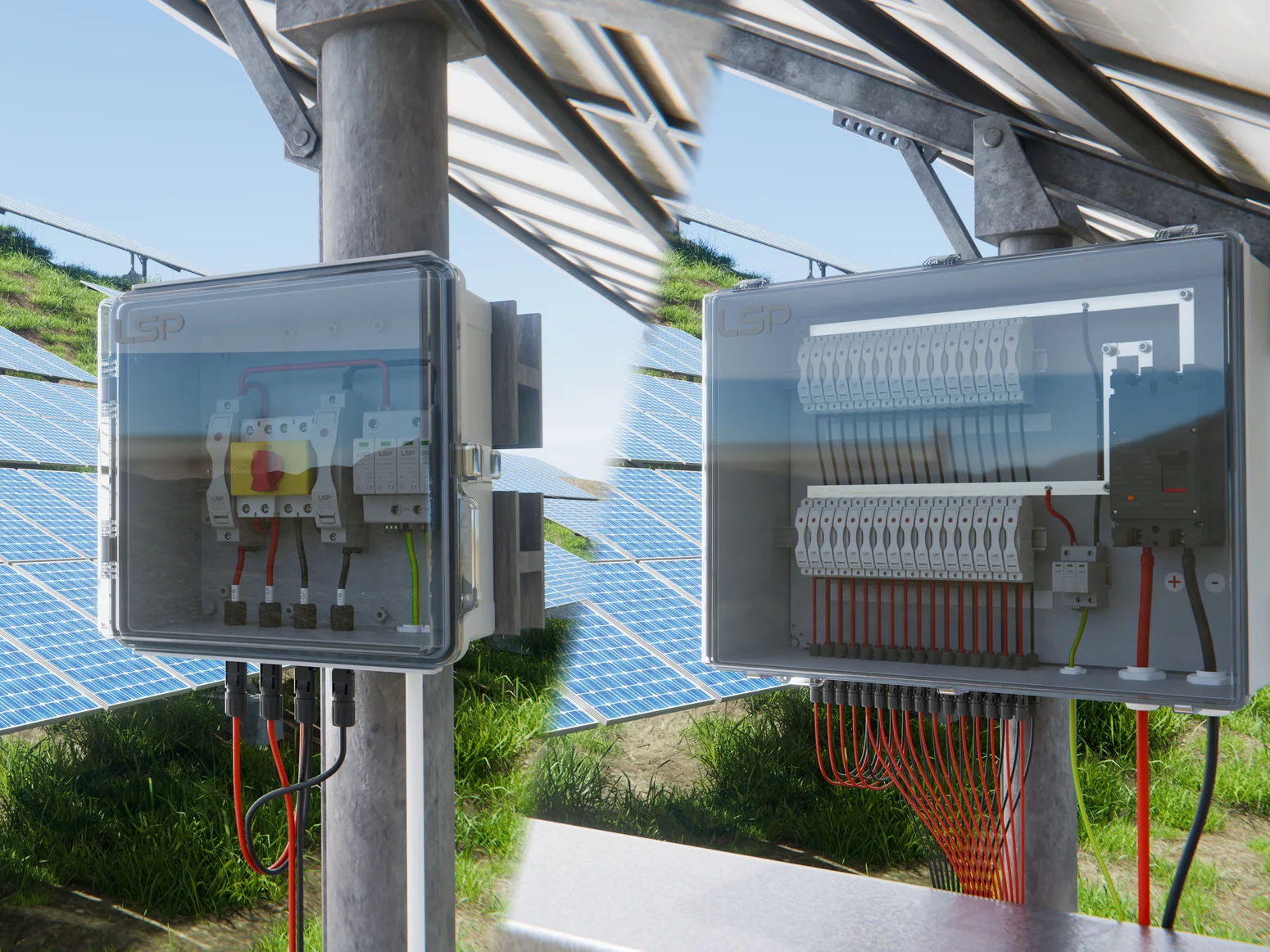
Every combiner box component carries a maximum voltage rating you must respect. When you connect strings with different voltages, you risk pushing components beyond their design limits. A solar combiner box rated for 600VDC cannot safely handle a string array operating near 1000VDC. This mismatch creates stress on fuses, disconnects, and bus bars inside the combiner.
Voltage Rating | Typical Application | Max String Length | Standards |
|---|---|---|---|
600VDC | Residential systems | 8-10 modules | UL 1741, UL 1077 |
1000VDC | Commercial rooftop | 18-22 modules | UL 489, IEC 60947-2 |
1500VDC | Utility-scale systems | 28-35 modules | IEC 60947-2 |
You must verify that every component in your pv combiner box matches the highest potential voltage your configuration can produce. A string with more panels generates higher voltage than a shorter string. That higher voltage stresses the insulation and clearance gaps inside your combiner. Over time, this stress degrades component materials and increases failure risk. Your system design should account for worst-case voltage scenarios, including cold-temperature voltage rises that increase panel output.
A combiner rated for residential service cannot protect a commercial array. You need the correct combiner class for your specific installation scale.
Current Backflow and Reverse Bias
Current backflow occurs when one string’s voltage drops below the common bus voltage. Higher-voltage strings then push current backward through the weaker string. This reverse current can exceed what your solar panels can safely withstand.
Modern solar installations rarely experience severe backflow because panels generate near-full voltage even in low light. However, a completely faulted string—one with failed bypass diodes or broken connections—presents a different scenario. That string can draw excessive current from healthy parallel strings. Your combiner’s fuses must interrupt this fault current before damage occurs.
Each string’s fuse rating should match that string’s specific short-circuit current characteristics. A combiner with properly sized fuses protects your entire solar array from cascading failures.
Fire Hazards and Code Compliance
Voltage mismatch creates thermal hazards that can escalate into fires. When reverse current flows through a faulted string, heat builds within the solar modules and wiring. This heat degrades solder joints and insulation. Over time, the damage accumulates invisibly until a catastrophic failure occurs. The National Electrical Code requires proper overcurrent protection for every solar installation.
Your combiner must comply with these standards to pass inspection and maintain insurance coverage. Code compliance means each string has an appropriately rated fuse, and the combiner itself carries the correct voltage rating for your system. A licensed electrician should verify your configuration meets all applicable requirements before you energize the system. This verification protects your property and your investment in solar technology.
Best Practices for a PV Combiner Box
You can avoid most voltage mismatch problems through thoughtful system design. The practices below protect your solar equipment, preserve energy harvest, and simplify maintenance. Each approach addresses a specific failure mode you might encounter when you ask, “can i have different string voltages to my combiner box?” The answer depends on how well you implement these strategies.
Use Separate MPPT Inputs
Your inverter’s multiple MPPT inputs offer the cleanest solution for mismatched strings. Each tracker operates independently, searching for its own maximum power point without interference from other channels. This architecture eliminates the voltage-matching problem entirely. Your combiner simply passes each group of strings to its dedicated tracker.
Consider two strings facing east and west. When you connect both to a single MPPT input, the lower-voltage string drags down the operating point of its counterpart. The tracker cannot optimize both simultaneously. One string always sacrifices output. The table below illustrates the difference:
Configuration | Impact |
|---|---|
7S E parallel with 7S W on MPPT1 | Small losses due to additional MPPT sweeps triggered by shade |
7S E on MPPT1 and 7S W on MPPT2 | No mutual influence between strings |
Separate MPPT inputs also provide fault isolation. If one string suffers damage or heavy soiling, the other channel continues delivering full power. You avoid a forced compromise between healthy and compromised arrays. This design enables faster solar installation, since a single inverter handles roof surfaces with different azimuths without requiring multiple units. Your solar array benefits from reduced hardware complexity.
Independent dual MPPT channels provide monitoring at the channel level. You gain finer granularity in site status, energy production, and troubleshooting data. This visibility helps you identify underperforming strings quickly. Your combiner’s monitoring capabilities complement this data.
Install DC-DC Optimizers or Microinverters
When separate MPPT inputs remain unavailable, DC-DC optimizers offer a powerful alternative. These devices adjust each panel’s voltage and current before the signal reaches your combiner. They effectively decouple individual modules from the string-level constraints. This approach works well for solar installations with complex shading patterns.
Consider a shaded panel within a 20-panel string. Normally each panel produces 50V at 8.4A. When shade drops one panel’s current to 3.2A, the entire string without optimizers limits to 3.2A. You lose 62% of potential power—3,200W instead of 8,400W. An optimizer changes this outcome. The DC-DC circuit boosts the shaded panel’s current back to 8.4A while reducing its voltage to 15V.
The optimizer outputs 126W from that panel. The other 19 panels continue at full output, producing 7,980W. Total power reaches 8,106W, reducing loss to just 3.5%.
This example demonstrates why optimizers matter. They enable each panel to contribute maximum power despite shading or voltage differences. Your pv combiner box receives more uniform inputs, reducing stress on protection components. The combiner operates within its design parameters.
Label and Fuse Each String Correctly
Proper fusing protects your system against reverse current damage. Each string requires its own independently calculated fuse rating. You cannot rely on a single rating for all inputs when voltages differ. Your combiner’s safety depends on this precision.
According to NEC 690.9, each string fuse must size to 156% of that string’s short-circuit current (Isc). For a string with 10A Isc, you calculate 15.6A. You then round up to the nearest standard fuse size, typically 16A or 20A. A different string with 13A Isc requires a different calculation: 1.56 × 13A = 20.28A. You select the next standard size above this value, which is 25A (gPV fuse), provided the module’s maximum series fuse rating allows it.
Overcurrent protection becomes necessary only when the combined available current from parallel strings exceeds a single string’s rating. This condition typically occurs with three or more strings. Per code, all ungrounded conductors of a PV circuit must disconnect simultaneously. A two-pole breaker in your combiner serves as both overcurrent protection and a code-compliant disconnect.
Clear labeling prevents confusion during maintenance. Each fuse should identify its corresponding string and rating. Your solar combiner box should include string-level monitoring capabilities to track individual performance. This monitoring helps you detect problems before they escalate.
Small voltage differences within 5-10% remain permissible. Large differences approaching the 33% rule threshold demand correction. Your combiner’s performance depends on these details. A well-designed solar combiner box maximizes your system’s long-term reliability.
Conclusion
Different string voltages should not be connected to the same PV combiner box without first confirming that the strings are electrically compatible and that the combiner box is properly rated for the system. Differences in voltage, current, module configuration, and MPPT requirements can affect system performance and safety. In most PV systems, strings connected to the same MPPT should have similar electrical characteristics to ensure stable and efficient operation.

LSP provides reliable PV Combiner Box solutions designed to simplify the connection, protection, and distribution of multiple PV strings.
If you are looking for a reliable PV Combiner Box manufacturer or supplier, LSP can provide professionally designed solutions for residential, commercial, and utility-scale solar applications. With practical experience in electrical protection equipment, LSP supports customers in selecting suitable PV Combiner Boxes according to system voltage, current, number of strings, and protection requirements.
FAQ
How much voltage difference can I tolerate?
Small differences within 5-10% produce negligible losses. The 33% rule marks your practical ceiling. Beyond that threshold, efficiency losses become significant. PVsyst data shows even multiple parallel strings lose less than 0.15% from voltage mismatch alone. Focus on preventing large gaps rather than chasing perfect equality.
Why does the lowest voltage string limit my entire array?
Parallel circuits share one common bus voltage. Physics dictates that voltage equalizes across all parallel branches. Your higher-voltage strings must drop to match the weakest input. This constraint comes from Kirchhoff’s voltage law. No inverter setting or combiner adjustment can override this fundamental behavior.
Can inverter settings fix voltage mismatch problems?
No. Your inverter’s MPPT tracker searches for the array’s combined maximum power point. It cannot optimize individual strings sharing one input. Separate MPPT inputs solve this problem entirely. Route mismatched strings to different trackers. Each channel then optimizes independently without forcing compromise.
How do I detect voltage mismatch in my array?
Measure each string’s operating voltage under real sunlight conditions. Temperature, panel degradation, and shading affect actual values. String-level monitoring capabilities in modern combiners track individual inputs continuously. Compare readings across your strings regularly. A persistent gap exceeding 10% warrants investigation and correction.