Proper maintenance of the Automatic Transfer Switch (ATS) is crucial for ensuring a reliable backup power supply during power outages. Regular inspections, electrical tests, and mechanical checks can prevent costly failures and keep your generator set running smoothly. By maintaining your ATS, you can ensure a seamless transition from the main power source to the backup power source, minimize downtime, and protect critical systems.
What is an Automatic Transfer Switch (ATS)?
An Automatic Transfer Switch (ATS) is a device that ensures a backup generator starts automatically in the event of a power outage. When the mains power is interrupted, the ATS detects the fault and switches the electrical load from the mains power to the generator, enabling a rapid power supply transition. Once the mains power is restored, the ATS automatically switches the load back to the mains power to ensure a smooth and seamless power supply transition.
Unlike manual transfer switches that require manual intervention, automatic transfer switches (ATS) can operate without any action. This is particularly important for industries where critical systems rely on continuous power supply. ATS helps to reduce downtime and ensures the smooth operation of these systems during power outages.
What Is Automatic Transfer Switch Maintenance and Why Is It Important?
The Purpose of Regular Inspection and Servicing
Regular inspection and servicing are fundamental to maintaining the performance and dependability of an automatic transfer switch (ATS). During maintenance, technicians examine power contacts, mechanical linkages, control circuits, terminals, and monitoring systems to identify signs of wear, corrosion, overheating, or loose connections.
Routine servicing helps correct minor issues before they develop into major failures, ensuring that the ATS remains ready to transfer electrical loads whenever the primary power source becomes unavailable. A structured maintenance program also helps maintain operational efficiency and reduces the likelihood of unexpected equipment downtime.
How Maintenance Improves Power Transfer Reliability
Automatic transfer switch maintenance improves power transfer reliability by ensuring that all mechanical, electrical, and control components operate correctly when a power source change is required. Regular inspections help detect worn contacts, loose terminals, damaged wiring, and control system faults that could delay or prevent successful switching.
Functional testing verifies that the transfer switch can accurately detect power failures and transfer loads between utility and backup sources without interruption. Consistent maintenance also minimizes the risk of unexpected breakdowns, reduces downtime, and ensures dependable power continuity for critical equipment and facilities.
Risks of Neglecting Preventive Maintenance
Neglecting preventive maintenance can significantly increase the risk of automatic transfer switch (ATS) failure during a power outage. Over time, contacts may wear, terminals can loosen, and dust, corrosion, or moisture may affect electrical and mechanical components. Without routine inspections and testing, these issues can remain undetected until the ATS is required to transfer power, potentially causing delayed switching, transfer failure, overheating, or equipment damage.
In critical facilities, such failures may result in costly downtime, operational disruptions, data loss, and safety hazards. Regular maintenance helps identify and resolve problems early, ensuring reliable performance and reducing long-term repair and replacement costs.
Impact on Equipment Lifespan and System Safety
Automatic transfer switch maintenance has a direct impact on both equipment lifespan and system safety. Regular inspections, cleaning, testing, and timely replacement of worn components help reduce mechanical wear and prevent premature failures. Proper maintenance keeps contacts, terminals, and control circuits operating efficiently, extending the service life of the ATS and reducing costly repairs.
From a safety perspective, routine servicing helps identify overheating, loose connections, insulation damage, and other potential hazards before they lead to electrical faults or equipment damage. A well-maintained ATS ensures reliable power transfer, protects connected systems.
Key Components That Require Regular Attention
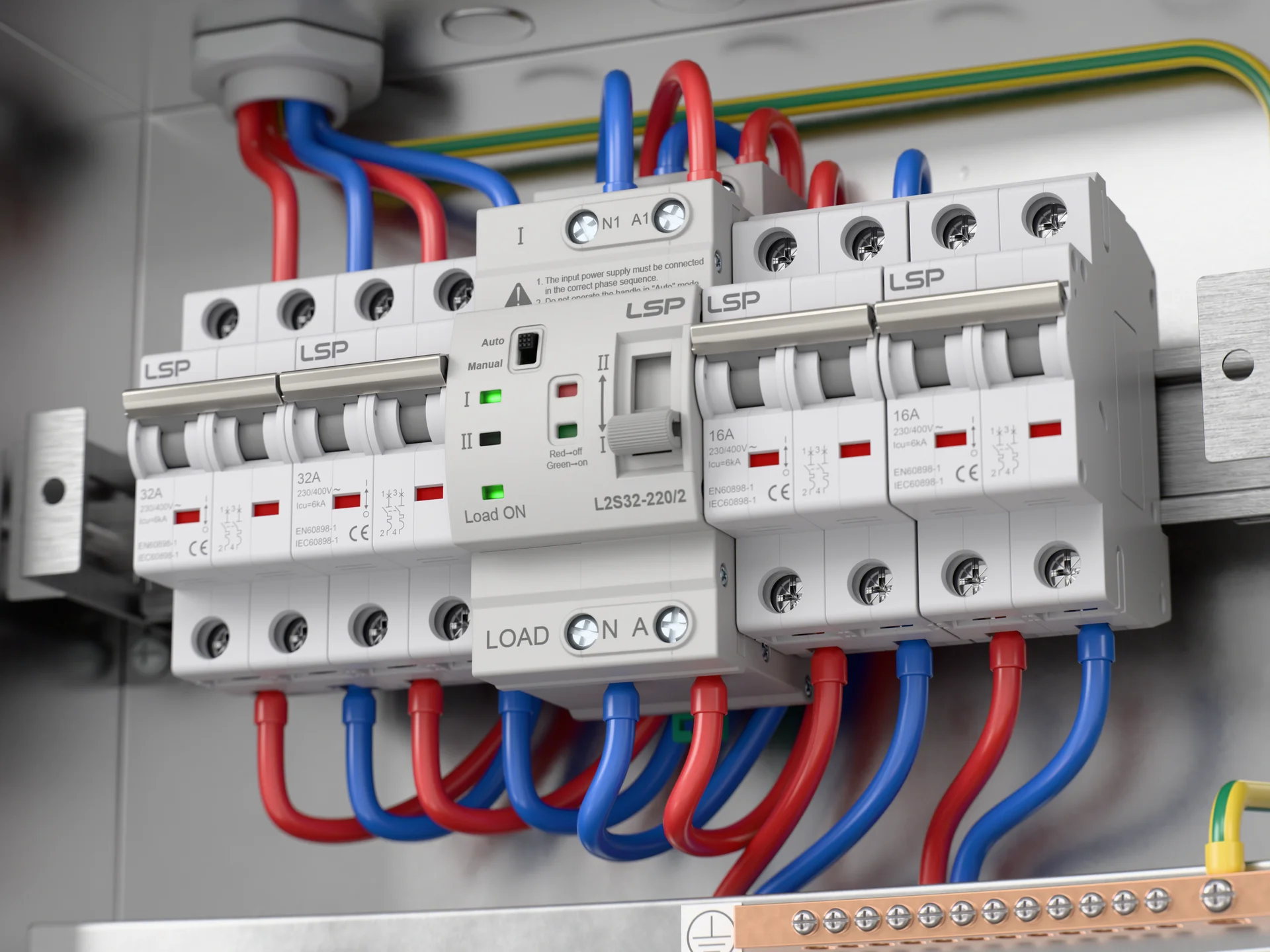
Switching Mechanism and Power Contacts:
- Power Contact Condition Inspection – Regularly inspect main power contacts for signs of wear, pitting, discoloration, or arcing damage that could affect current-carrying capacity and switching performance.
- Mechanical Operation Verification – Check the switching mechanism to ensure smooth movement and proper engagement between the primary and backup power sources without sticking or excessive resistance.
- Contact Alignment Assessment – Verify that contacts are correctly aligned and close evenly to maintain reliable electrical connections and minimize contact resistance.
- Lubrication of Moving Components – Where recommended by the manufacturer, lubricate mechanical linkages, pivots, and moving parts to reduce friction and prevent premature wear.
- Detection of Overheating Signs – Look for evidence of overheating, such as burned insulation, melted components, unusual odors, or discoloration around contacts and terminals.
- Functional Transfer Testing – Perform routine transfer and retransfer tests to confirm that the switching mechanism and power contacts operate correctly during simulated power loss and restoration conditions.
Control Unit and Monitoring Circuits:
- Control Logic Verification – Inspect the control unit to ensure all programmed transfer, retransfer, and timing functions operate according to system requirements and manufacturer specifications.
- Voltage and Frequency Sensing Checks – Test monitoring circuits to confirm accurate detection of voltage loss, undervoltage, overvoltage, and frequency abnormalities that trigger transfer operations.
- Indicator and Display Inspection – Verify that status indicators, LED lights, digital displays, and alarm messages function correctly and provide accurate system information.
- Communication Interface Testing – Check communication ports and remote monitoring connections to ensure reliable data transmission between the ATS and supervisory control systems.
- Circuit Board Examination – Inspect control boards and electronic components for signs of overheating, corrosion, loose connections, or physical damage that could affect performance.
- Alarm and Fault Simulation Tests – Perform functional tests to verify that monitoring circuits correctly detect faults and generate appropriate alarms, notifications, and operational responses.
Terminal Connections and Wiring Integrity:
- Terminal Tightness Inspection – Regularly check all power and control terminals for loose connections, as vibration and thermal cycling can reduce clamping force over time and increase electrical resistance.
- Wiring Condition Assessment – Inspect cables and conductors for signs of wear, cracking, abrasion, discoloration, or insulation damage that may compromise electrical safety and reliability.
- Overheating Detection – Look for evidence of overheating around terminals and wiring, including burn marks, melted insulation, discoloration, or unusual odors caused by poor connections.
- Corrosion and Contamination Checks – Examine terminals and wiring connections for corrosion, moisture intrusion, dust accumulation, or other contaminants that could affect electrical performance.
- Cable Routing and Support Verification – Ensure that wiring is properly routed, secured, and protected from mechanical stress, excessive bending, and environmental damage.
- Electrical Continuity and Performance Testing – Conduct continuity, insulation resistance, and connection integrity tests to verify that all wiring and terminal connections provide stable and reliable electrical paths.
Sensors, Indicators, and Communication Modules:
| Component | Maintenance Focus | Inspection / Testing Actions | Potential Issues if Neglected |
| Sensors | Ensure accurate detection of voltage, frequency, and power source status | Calibrate sensing accuracy, verify response thresholds, test under simulated power conditions | Incorrect transfer signals, delayed switching, failure to detect power loss |
| Indicators | Confirm proper visual and alarm status display for system conditions | Check LED lights, LCD screens, alarm buzzers, and fault signals for correct operation | Misleading status information, unnoticed faults, operator misinterpretation |
| Communication Modules | Maintain reliable data exchange with monitoring or control systems | Test remote monitoring links, verify signal transmission, check network or interface stability | Loss of remote control, communication failure, reduced system visibility |
Recommended Maintenance Schedule for Reliable Operation
| Maintenance Level | Key Focus | Main Tasks | Purpose / Outcome |
| Monthly Visual Inspection Tasks | Basic condition check | Inspect enclosure for dust, moisture, corrosion; check indicator lights and alarms; verify ventilation; look for overheating signs or loose external wiring | Early detection of visible issues and prevention of unexpected failures |
| Quarterly Functional Testing Procedures | Operational performance verification | Test automatic transfer and retransfer; simulate power failure; verify voltage/frequency sensing; check alarms, indicators, and communication signals | Ensure ATS responds correctly during real power outages |
| Annual Preventive Maintenance Activities | Deep technical servicing | Internal cleaning; tightening terminals; inspecting contacts and switching mechanism; insulation resistance testing; replacing worn components | Extend equipment lifespan and ensure long-term reliability |
| Maintenance Planning for Critical Facilities | High-reliability system management | Customized maintenance schedules; real-time monitoring; increased testing frequency; detailed maintenance logs; risk-based planning | Ensure continuous power supply in critical environments and minimize downtime risk |
Essential Inspection Procedures During Service
- Checking Mechanical Wear and Contact Condition
During service, technicians should carefully inspect the switching mechanism and power contacts for signs of wear, erosion, pitting, or arcing damage. Contacts must close evenly and maintain proper alignment to ensure stable electrical conductivity. Any excessive wear or deformation can increase resistance, cause overheating, or lead to switching failure. Mechanical movement should also be tested to confirm smooth and reliable operation without sticking or delay. - Verifying Voltage and Frequency Detection Accuracy
It is essential to verify that the ATS accurately detects voltage levels, frequency variations, and power source stability. This involves simulating abnormal conditions such as undervoltage, overvoltage, or frequency deviation to confirm correct system response. Accurate detection ensures timely switching between utility and backup power sources, preventing load interruption or equipment damage. - Inspecting Cable Tightness and Electrical Connections
All terminal connections and wiring points should be checked for tightness and stability. Loose connections can cause voltage drops, overheating, or intermittent operation. Technicians should also inspect insulation conditions and ensure that cables are properly secured and free from mechanical stress, vibration damage, or environmental degradation. - Identifying Signs of Overheating and Corrosion
Inspection should include checking for discoloration, burn marks, melted insulation, or unusual odors that indicate overheating. Corrosion caused by moisture or environmental exposure must also be identified and addressed promptly. These conditions can weaken electrical integrity, increase resistance, and pose serious safety risks if left unresolved.
Testing Methods to Verify Proper Performance
- Simulating Utility Power Failure Scenarios
This testing method involves intentionally simulating a loss of utility power to verify that the automatic transfer switch responds correctly. The ATS should detect the outage immediately and initiate a transfer to the backup power source, such as a generator. During the test, technicians observe detection speed, transfer initiation, and system stability to ensure uninterrupted load supply and confirm that emergency switching logic functions as intended. - Confirming Source Transfer and Retransfer Functions
This procedure verifies both the transfer to backup power and the return (retransfer) to the primary source when normal conditions are restored. The system must correctly identify stable voltage and frequency before switching back. Technicians check for smooth operation, correct sequencing, and absence of load interruption or instability during both transitions, ensuring reliable bidirectional switching performance. - Measuring Switching Time and Response Accuracy
This method focuses on evaluating how quickly and accurately the ATS responds during power source changes. Using measurement tools, technicians record the time between power failure detection and load transfer, as well as the retransfer delay. These results are compared against system design specifications to ensure compliance with performance requirements and to confirm that critical loads receive power without unacceptable interruption.
Cleaning and Preventive Care Best Practices
Removing Dust and Environmental Contaminants:
Regularly clean the interior and exterior of the automatic transfer switch enclosure to prevent dust, debris, and conductive particles from accumulating on electrical components. Use appropriate dry cleaning methods or approved tools to avoid damaging sensitive parts and ensure stable electrical performance.
Protecting Components from Moisture and Corrosion:
Inspect the enclosure for signs of moisture ingress and ensure all seals, gaskets, and cable entries are properly secured. Apply anti-corrosion measures where necessary, and maintain a dry operating environment to prevent rust, oxidation, and insulation degradation.
Lubricating Moving Parts When Required:
Apply manufacturer-recommended lubricants to mechanical linkages, pivots, and moving switching components when specified. Proper lubrication reduces friction, minimizes mechanical wear, and helps ensure smooth and reliable switching operation over time.
Maintaining Proper Ventilation and Operating Conditions:
Ensure that ventilation openings are clear and that the ATS operates within its recommended temperature and humidity range. Good airflow helps prevent overheating, improves component lifespan, and supports stable long-term system performance.
Safety Considerations During Maintenance Activities
Isolation and Lockout Procedures
Isolation and lockout procedures are critical safety measures during automatic transfer switch maintenance to prevent accidental energization and electrical hazards. Before any work begins, the ATS must be fully isolated from both utility and backup power sources, and all energy inputs should be securely disconnected.
Lockout/tagout devices are then applied to ensure that power cannot be restored while maintenance is in progress. Technicians should verify zero voltage using appropriate testing equipment before touching any internal components. These steps help eliminate the risk of electric shock, arc flash, or equipment damage, ensuring a safe working environment and compliance with standard electrical safety practices.
Personal Protective Equipment Requirements
- Insulated Gloves – Wear properly rated insulated gloves to protect against electric shock when working near or verifying electrical circuits.
- Arc-Flash Protective Clothing – Use arc-rated clothing to reduce injury risk from potential arc flash incidents during inspection or testing activities.
- Safety Goggles or Face Shield – Protect eyes and face from sparks, debris, or accidental electrical discharge while working inside or near the ATS enclosure.
- Safety Helmet (Hard Hat) – Wear a hard hat to prevent head injuries in industrial or equipment-heavy environments.
- Insulated Safety Footwear – Use electrically insulated boots to reduce the risk of ground fault shock and provide protection in damp or conductive environments.
- Hearing Protection (If Required) – Use ear protection in high-noise environments, especially during testing or switching operations involving generators or heavy electrical equipment.
Safe Testing Practices for Energized Systems
Safe testing practices for energized systems are essential when working with an automatic transfer switch to minimize the risk of electrical hazards. Whenever possible, maintenance should be performed on de-energized equipment; however, if energized testing is required, technicians must use properly rated insulated tools and measurement devices.
All testing should be conducted following strict safety procedures, including maintaining safe working distances, avoiding direct contact with live components, and ensuring clear communication among personnel. Continuous monitoring of system conditions is important during tests to detect abnormal behavior immediately. These practices help reduce the risk of arc flash, electric shock, and equipment damage while ensuring accurate performance verification under real operating conditions.
International Standards and Compliance Requirements
Here is a detailed overview of the international standards and compliance requirements for Automatic Transfer Switch (ATS) maintenance. These guidelines are based on the IEC (International Electrotechnical Commission) and EN (European Standard) frameworks.
| Topic | Key Focus | Maintenance / Compliance Requirements | Outcome / Benefit |
| Understanding IEC and EN Requirements | International safety and performance standards for ATS systems | Ensure design, installation, and maintenance follow applicable IEC and EN standards for electrical safety, switching performance, and insulation coordination | Ensures globally recognized safety, reliability, and interoperability |
| Maintenance Practices Supporting Regulatory Compliance | Routine servicing aligned with standard requirements | Perform scheduled inspections, functional testing, torque checks on terminals, insulation resistance testing, and verification of switching performance | Maintains compliance readiness and reduces operational risks |
| Documentation Needed for Audits and Inspections | Record-keeping for traceability and verification | Maintain maintenance logs, test reports, inspection checklists, fault records, and corrective action documentation | Supports audits, ensures traceability, and demonstrates compliance |
| Ensuring Long-Term Operational Safety | Sustained system reliability and hazard prevention | Implement preventive maintenance programs, timely component replacement, and periodic system validation tests | Extends equipment lifespan and ensures continuous safe operation |
Why Choose LSP for Automatic Transfer Switch Solutions?

LSP Brand Overview
LSP is a trusted manufacturer of power distribution and protection solutions, offering a comprehensive range of Automatic Transfer Switch (ATS) products for reliable backup power management. Designed in accordance with IEC 60947-6-1 standards, LSP ATS solutions provide fast, safe, and automatic switching between primary and backup power sources.
With advanced monitoring functions, durable construction, and multiple current ratings, LSP Automatic Transfer Switches are widely used in data centers, healthcare facilities, commercial buildings, and industrial applications where uninterrupted power supply is critical.
ATS Designs Compliant with IEC and EN Standards
Here are the key reasons to choose LSP for Automatic Transfer Switch (ATS) solutions:
| Feature | LSP Advantage | Benefit to Users |
| IEC and EN Compliance | LSP Automatic Transfer Switches are designed in accordance with relevant IEC and EN standards for low-voltage switching and power transfer applications. | Ensures reliable operation, safety, and compatibility with international project requirements. |
| Reliable Switching Performance | ATS designs are engineered to provide stable and accurate transfer between primary and backup power sources. | Reduces the risk of power interruption and improves system reliability. |
| Electrical Safety | Products are developed with safety-focused designs, including insulation and protection features that meet international standards. | Enhances operational safety and protects connected equipment. |
| Quality Assurance | Manufacturing and testing processes are aligned with internationally recognized quality requirements. | Provides consistent product performance and long-term dependability. |
| Global Application Suitability | Compliance with IEC and EN standards makes LSP ATS products suitable for a wide range of international markets and industries. | Simplifies project approval and supports global deployment. |
| Long-Term System Reliability | Standard-compliant designs help maintain stable performance under demanding operating conditions. | Extends equipment service life and lowers maintenance costs. |
FAQ
How often should a Automatic Transfer Switch be tested?
Regular Automatic Transfer Switch Maintenance is vital for reliability. Perform a monthly functional test to verify basic mechanical and control operations. Additionally, schedule a comprehensive full-load test annually to ensure the system handles actual power transitions safely. Adhering to these intervals helps identify wear or faults early, preventing critical failures during power outages.
Can ATS fail during a power outage?
Yes, an ATS can fail during a power outage if regular Automatic Transfer Switch Maintenance is neglected. Common issues include worn contacts, mechanical seizures, or control board malfunctions. These failures prevent the switch from detecting power loss or transferring the load to the backup source, causing critical downtime. Periodic inspections are vital to ensure seamless operation.
Can maintenance be performed without shutting down power?
Limited Automatic Transfer Switch Maintenance, like visual checks, can be done while powered. However, deep maintenance usually requires a shutdown for safety unless the system has a bypass-isolation switch. This feature allows technicians to isolate the ATS for service without interrupting power to the load. Without it, working on live parts is hazardous and generally avoided.
What are the most important components to inspect?
Critical Automatic Transfer Switch Maintenance focuses on power contacts, which must be free of pitting or corrosion. Inspect mechanical linkages for smooth operation and proper lubrication. Ensure the control module functions correctly and all electrical connections are tight to prevent heat buildup. Finally, test the transfer mechanism to guarantee it switches reliably during a power loss.
What causes Automatic Transfer Switch failures?
ATS failures often result from neglected Automatic Transfer Switch Maintenance. Primary causes include loose electrical connections, oxidized power contacts, and mechanical parts seizing due to lack of lubrication. Additionally, environmental factors like dust or moisture can damage sensitive control modules. Regular upkeep is essential to prevent these issues from causing system downtime.