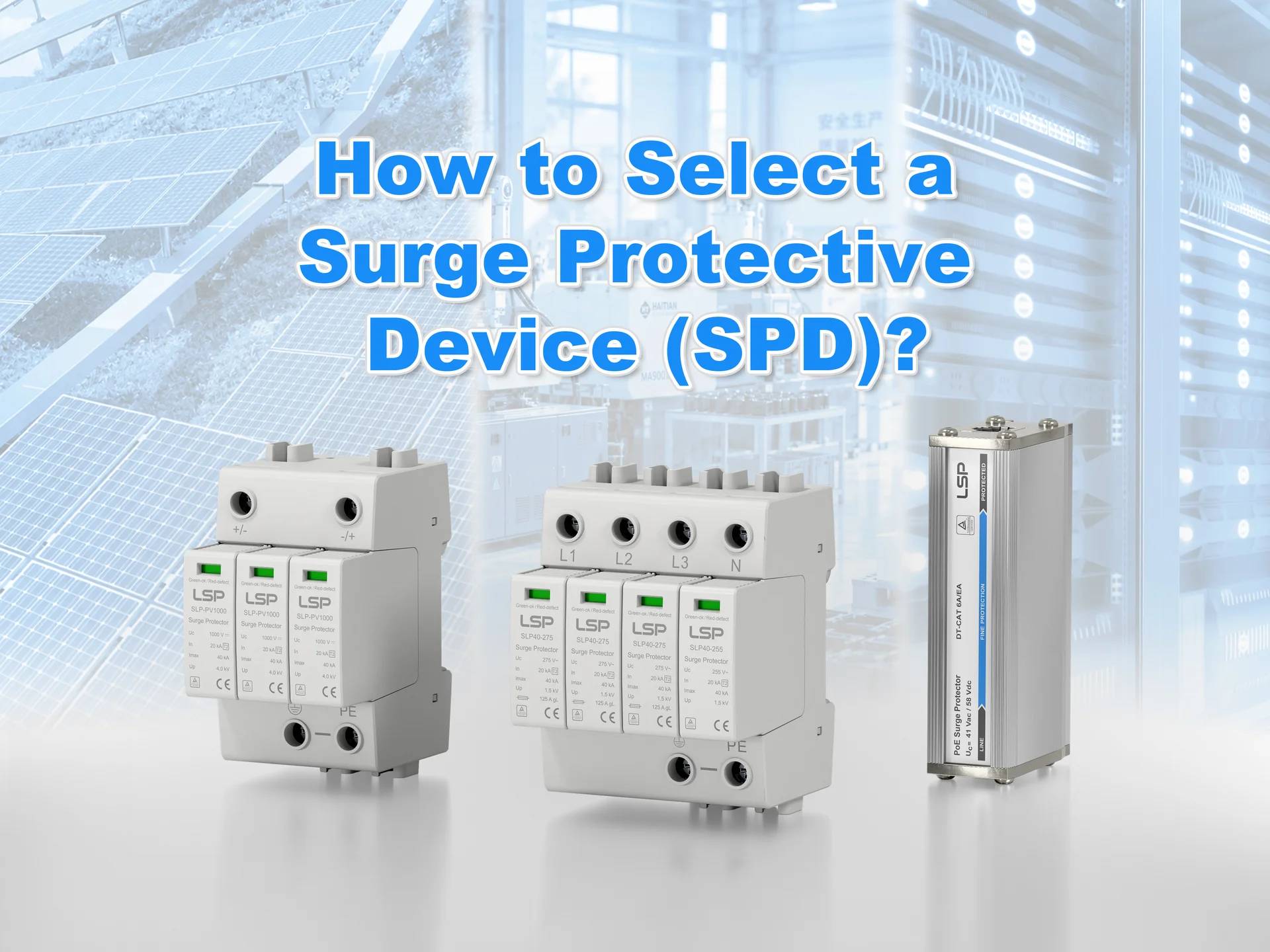
What is an AC SPD?
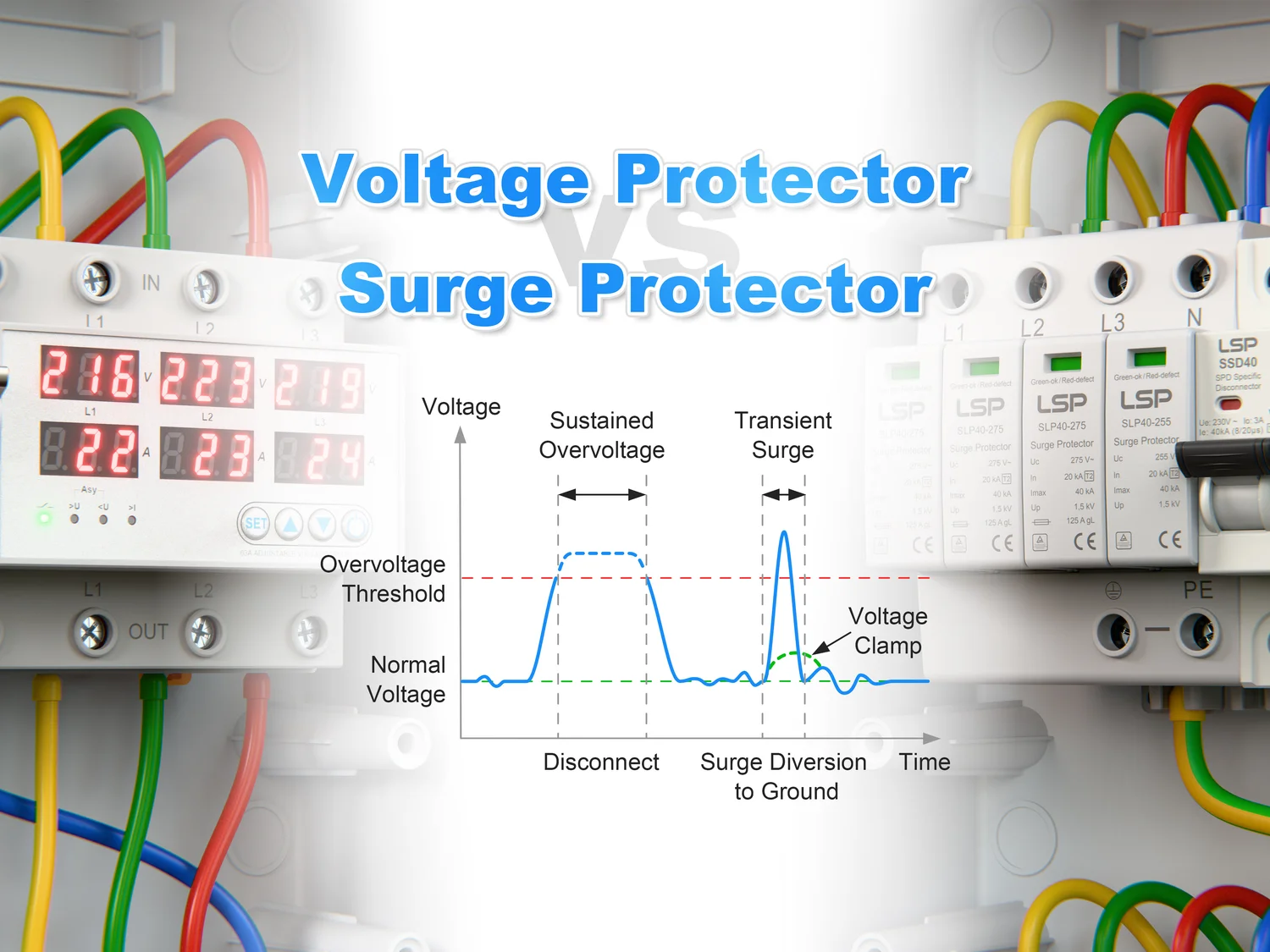
AC SPD (Surge Protection Device) is a specialized, non-linear component that’s installed in your AC power network to handle sudden overvoltages, those unexpected spikes that could otherwise damage sensitive equipment downstream. It acts like a pressure relief valve, detecting high voltage and diverting excess energy safely to the ground. AC SPDs are designed specifically for alternating current systems operating at 50 or 60 Hz.
In everyday terms, it’s like having a safety valve for electricity: when everything is normal, it stays out of the way, letting your power flow smoothly. But the moment a surge comes along, it steps in, absorbs the excess energy, and keeps your devices safe. Without it, even a minor voltage spike could fry servers, trip circuit breakers, or cause costly downtime.
What is a Power Surge?
Power surges come in several forms, and understanding them is key to protecting your systems:
- Lightning Surge: High-energy spikes caused by direct or nearby lightning strikes. Even if your building isn’t hit directly, the electromagnetic pulse can induce dangerous voltages in your wiring.
- Switching Surge: Occurs when heavy equipment, motors, or large inductive loads are turned on or off. The sudden change in current generates transient voltage spikes that travel through the network.
- Grid Fluctuations: The utility network itself can create small but potentially damaging voltage spikes due to faults, capacitor switching, or sudden load changes.
These surges are hidden threats in your AC system. They may not happen every day, but when they do, the damage can be immediate and costly.
How Does an AC SPD Work?
An AC SPD is engineered to respond intelligently to these threats:
Normal Operation: The SPD stays in a high-impedance state, meaning it does not conduct current and does not interfere with your devices.
During a Surge: When a voltage spike occurs, the SPD instantly switches to low impedance, forming a path to safely divert the surge current into the ground.
- Core Components:
MOV (Metal Oxide Varistor): Absorbs the bulk of the surge energy.
GDT (Gas Discharge Tube): Handles very high-energy surges, providing a backup path for extreme events.
Thermal Disconnector: Acts as a safety fuse to disconnect the device if it overheats, ensuring the system remains safe.
Together, these components make the SPD a highly responsive, reliable protector. The MOV absorbs most spikes, the GDT handles extreme surges, and the thermal disconnector ensures safety under all conditions.
Types of AC SPD
| Type | Function | Typical Installation | Waveform |
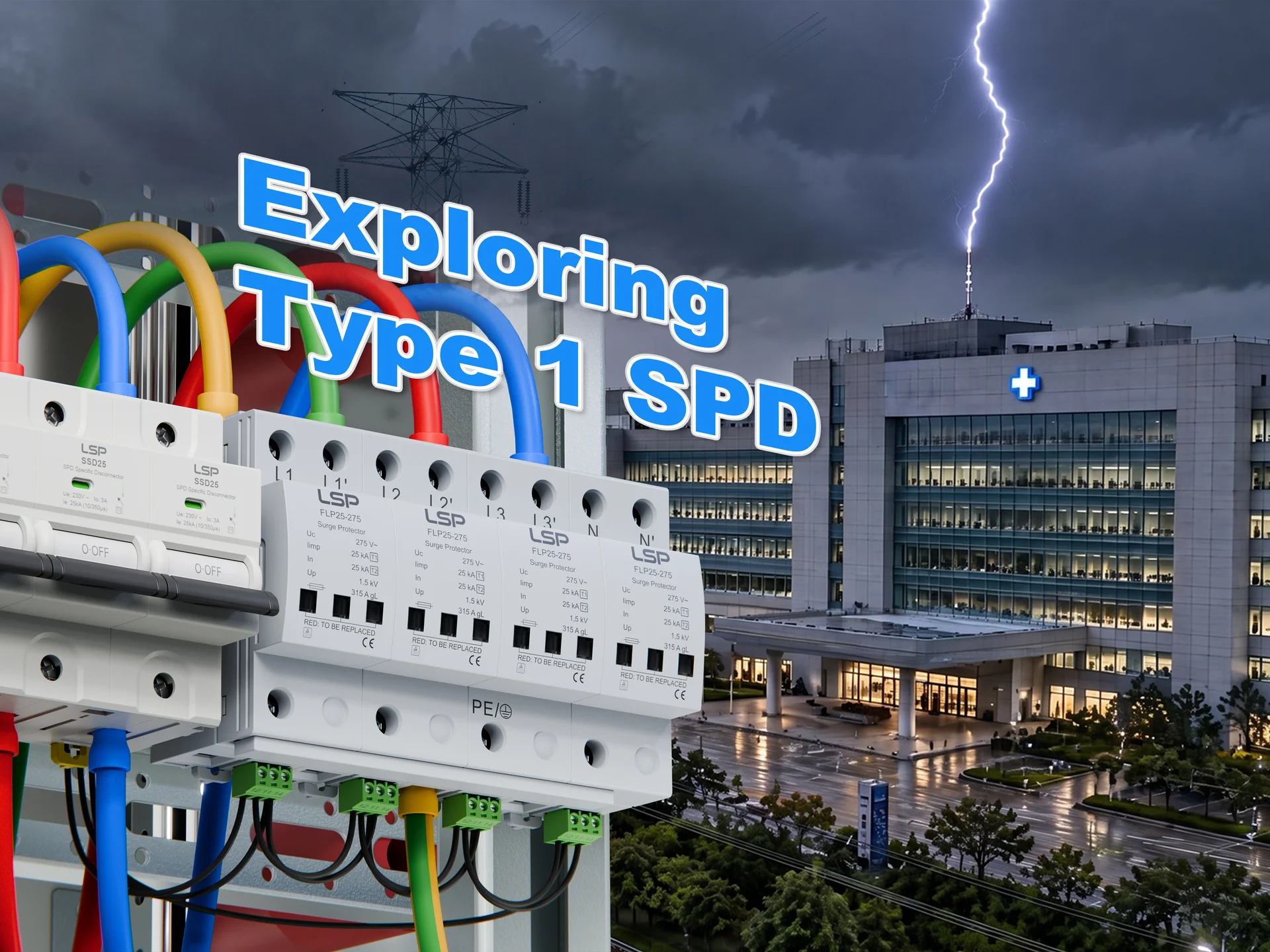
| Type 1 SPD | First defense against direct lightning | Main service entrance | 10/350 µs |
| Type 1+2 SPD | Combines Type 1 & 2 functions | Main distribution board | 10/350 & 8/20 µs |
| Type 2 SPD | Protects against residual/induced surges | Distribution boards | 8/20 µs |
| Type 2+3 SPD | Distribution & terminal protection | Close to end devices | 8/20 & 1.2/50 µs |
| Type 3 SPD | Terminal protection for sensitive devices | Near sensitive equipment | 1.2/50 µs |
Choosing the Right AC SPD
Key Technical Parameters
When selecting an AC SPD, understanding these parameters is essential:
Impulse Current (Iimp): Refers to the SPD’s ability to handle a single, very high-energy surge, such as a direct lightning strike (10/350 µs waveform).
Maximum Continuous Operating Voltage (Uc): The highest voltage the SPD can safely withstand under normal conditions without operating.
Nominal Discharge Current (In) & Maximum Discharge Current (Imax): In represents the SPD’s ability to handle repeated surges, while Imax indicates the peak energy the device can safely absorb in extreme events.
Voltage Protection Level (Up): This determines how low the SPD can limit the surge voltage across your equipment. Lower Up means better protection.
Adaptation to Different Grounding Systems: Different systems like TT, TN-S, or TN-C-S have varying requirements for SPD selection. Choosing the right SPD ensures proper energy diversion and safety compliance.
Standards & Compliance
Selecting an SPD that meets recognized standards ensures safety, reliability, and regulatory compliance:
IEC 61643-11 / EN 61643-11: International standard for low-voltage surge protective devices.
UL 1449 & CE Certification: Required for North American and European markets.
Material & Quality Standards: Industrial SPDs often require V-0 flame-retardant housings and ISO 9001 quality management compliance.
By choosing an SPD that adheres to these standards, you reduce installation risk, ensure predictable performance, and simplify maintenance and certification processes.
AC SPD Wiring & Installation Guide
Safety Precautions
Always disconnect the mains power supply before installing or servicing the SPD.
Follow local electrical codes and IEC standards (IEC 61643 series) for SPD installation.
Use personal protective equipment (PPE) such as insulated gloves and safety glasses.
Do not install a damaged or improperly rated SPD.
Wiring Instructions
- Line and Neutral Connection:
Connect the SPD line (L) terminal to the phase conductor and the neutral (N) terminal to the neutral conductor.
- Ground/Earth Connection:
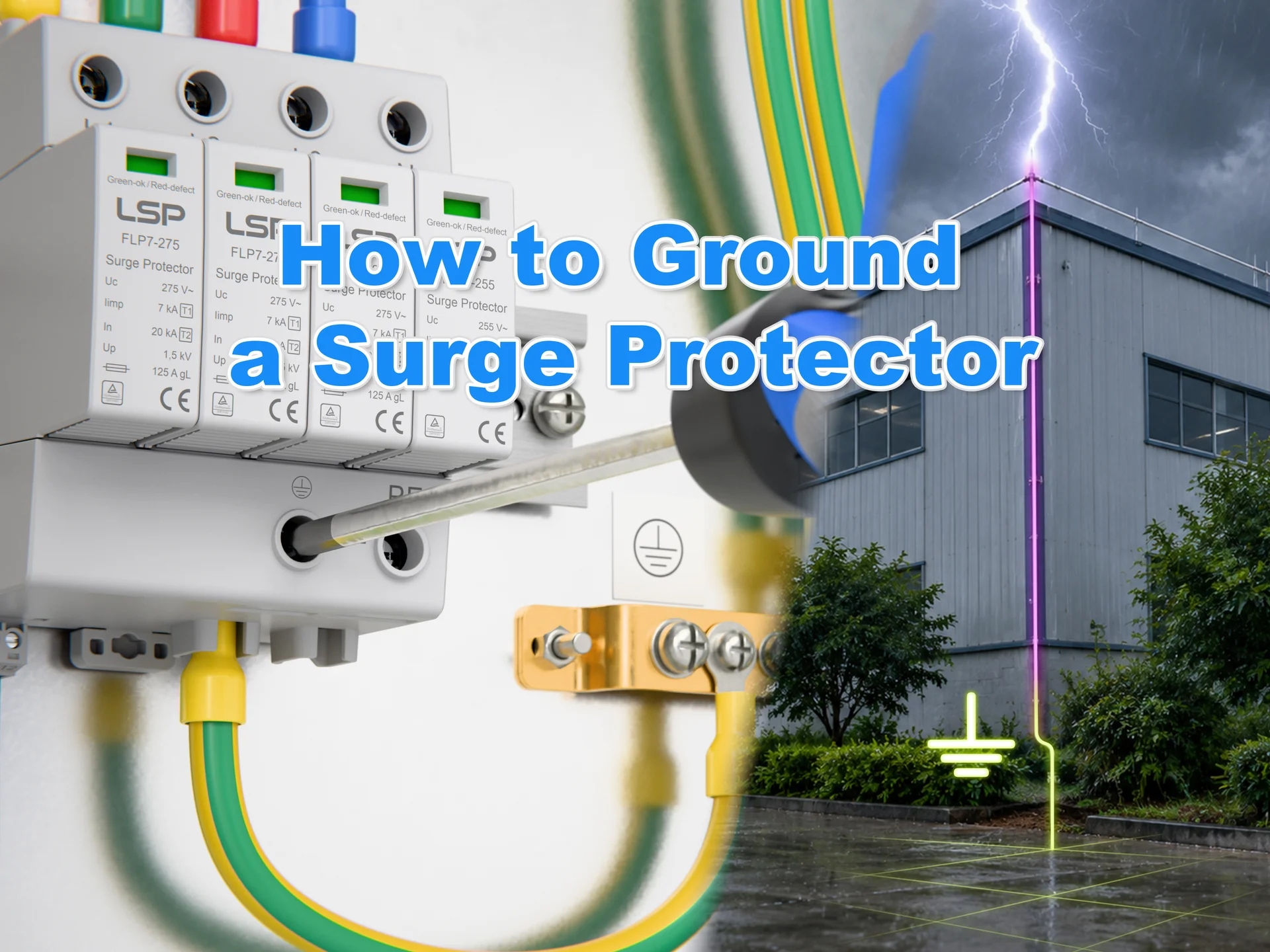
Connect the SPD’s ground (PE) terminal to a low-impedance, reliable earth connection.
- Polarity:
Maintain correct polarity; reversing line and neutral may reduce SPD effectiveness.
- Series Installation:
Do not install SPD in series with fuses or circuit breakers that may limit its current unnecessarily.
Mounting Recommendations
Mount the SPD as close as possible to the protected equipment or distribution board.
Use suitable mounting hardware to ensure mechanical stability.
Avoid installing SPD in high-temperature or highly humid environments unless rated for it.
Commissioning & Testing
After wiring, verify all connections are tight and correct.
Power up the system and check the SPD status indicator (if available).
Test the grounding resistance to ensure low impedance.
Maintenance
Regularly inspect SPD indicators and status lights for signs of failure.
Replace SPDs after major surges or if indicators show device failure.
Keep wiring and terminals clean and free from corrosion.
Common Applications of AC SPD

Residential Buildings
AC SPDs protect household electrical systems from unexpected voltage spikes caused by lightning strikes or switching operations. This includes safeguarding sensitive home electronics, kitchen appliances, heating and cooling systems, and lighting circuits. By installing an SPD, homeowners can prevent costly damage to valuable equipment and reduce the risk of electrical fires caused by surges.
Commercial Buildings
In offices, shops, and other commercial spaces, SPDs safeguard critical systems such as computers, servers, HVAC units, and lighting circuits. These devices often experience transient overvoltages due to switching, power grid fluctuations, or nearby lightning strikes. Using SPDs ensures minimal downtime, protects valuable business equipment, and maintains smooth operation of daily commercial activities.
Industrial Facilities
Industrial environments often have high-power machinery and sensitive control systems that are vulnerable to high-energy surges. AC SPDs protect motors, control panels, PLCs, and production machinery from damage caused by lightning, switching events, or grid disturbances. Proper SPD installation reduces equipment downtime, avoids costly repairs, and ensures consistent production quality.
Data Centers
Data centers rely on uninterrupted power to keep servers, networking devices, and communication systems online. AC SPDs shield this equipment from power surges caused by lightning strikes, grid switching, or nearby industrial activity. This protection helps maintain uptime, prevents data loss, and avoids hardware damage, which is critical for business continuity and IT reliability.
LSP: Your Partner in Reliable AC SPD Solutions

Specializing in the manufacturing of Surge Protective Devices since 2010, LSP has served clients in over 10 different countries. With more than a decade of experience, we take pride in having a customer base that is global. Furthermore, our facility is 1600 square meters and contains two fully automated production lines, which allow us to produce 300,000 SPDs a year. Moreover, LSP maintains quick turnaround times due to our production capabilities. Standard products are provided within 10-15 days and custom solutions in a month. Reliably protecting your electrical systems, our AC SPDs are validated by ISO9001, TUV, CB, and CE certifications.
The AC SPDs developed by LSP incorporate state-of-the-art manufacturing processes along with premium materials to ensure dependable long-lasting performance. MOVs (Metal Oxide Varistors) are procured from LKD, which is selected by many of the world’s leading manufacturers of SPDs, and Gas Discharge Tubes (GDTs) are acquired from Vactech, which is also reputable in the market like Phoenix Contact. GTPs UL certified moisture encapsulated motion breaks assists in arming our AC SKDs against moisture ingress are complementated with motion lowemmp lation triggers caps that stave off fires. These units have Type 1 and Type 2 certifications SPDs can endure lightning strikes of our units withstand In=20kA, Imax=40kA and guarantees enduring protection in harsh conditions.
At LSP, we know how essential dependable safeguarding of AC systems is. This is why we go beyond providing reliable products; we offer assistance throughout the entire process. From selection through to aftersales care, our dedicated sales engineers guide clients in choosing the most compatible AC SPD while our in-house design team develops customized solutions and modifications, from the product design to the packaging and logo engraving. Given our advanced system of production, our clients enjoy rapid turnaround times, and with our five-year warranty on parts, service level of twelve-hour response times to enquiries, and global assistance, peace of mind is assured. Whether it is remote troubleshooting or spare parts, protecting your AC systems reliably and efficiently is our forte at LSP.
Conclusion: Empowering Your Electrical Systems with Robust AC SPD Protection
In conclusion, the AC Surge Protective Device (SPD) serves as a vital safeguard against the ever-present risk of power surges. Acting like a vigilant guardian, it intercepts and diverts harmful electrical spikes, protecting our sensitive and interconnected electronic systems. Understanding how AC SPDs work, the threats they counter, and the range of available options is essential for making informed decisions about electrical safety. The metal oxide varistor (MOV) plays a central role in many SPD designs.From homes to industrial facilities, the need for reliable surge protection is clear. By selecting the right SPD based on application, rating, and installation requirements—and, and by following proper maintenance—we, we can strengthen our systems against unpredictable power disturbances.
Investing in AC SPDs is a wise step toward ensuring the safety, reliability, and longevity of our electrical infrastructure. It provides peace of mind and protects the devices we rely on every day. Choose LSP for comprehensive, high-quality surge protection solutions trusted worldwide—engineered for performance, built for peace of mind.
FAQ – AC SPD
What is AC SPD used for?
AC SPD, or Surge Protection Device, is designed to protect electrical and electronic equipment from transient overvoltages caused by lightning, switching operations, or grid fluctuations. It acts as a safety valve, diverting harmful surge currents to the ground and preventing damage to sensitive devices.
Which devices can AC SPD protect?
It is commonly used to protect transformers, distribution panels, household appliances, industrial equipment, communication devices, and PV inverters in AC systems.
What is the lifespan of AC SPD?
The lifespan of an AC SPD depends on its environment and surge frequency, usually 5–10 years. Regular checks of its status indicator are recommended.
Can AC SPD be reused?
Some SPDs can be reused after minor surges, but major lightning strikes may damage them, and replacement is necessary.
Is it safe to use AC SPD with circuit breakers?
Yes, they can be used together. SPD protects against transient surges, while circuit breakers protect the circuit from overloads and short circuits.
How to know if AC SPD has failed?
Most AC SPDs have status indicators or alarms. When the SPD is damaged or reaches its maximum capacity, the indicator will show a fault and replacement is needed.